I am John the Baptist
John the Baptist’s story is imagined from the inside, tracing an unlikely birth, a prophetic calling, and the quiet miracles that prepared the way for Christ.
 Read Time: 5 minutes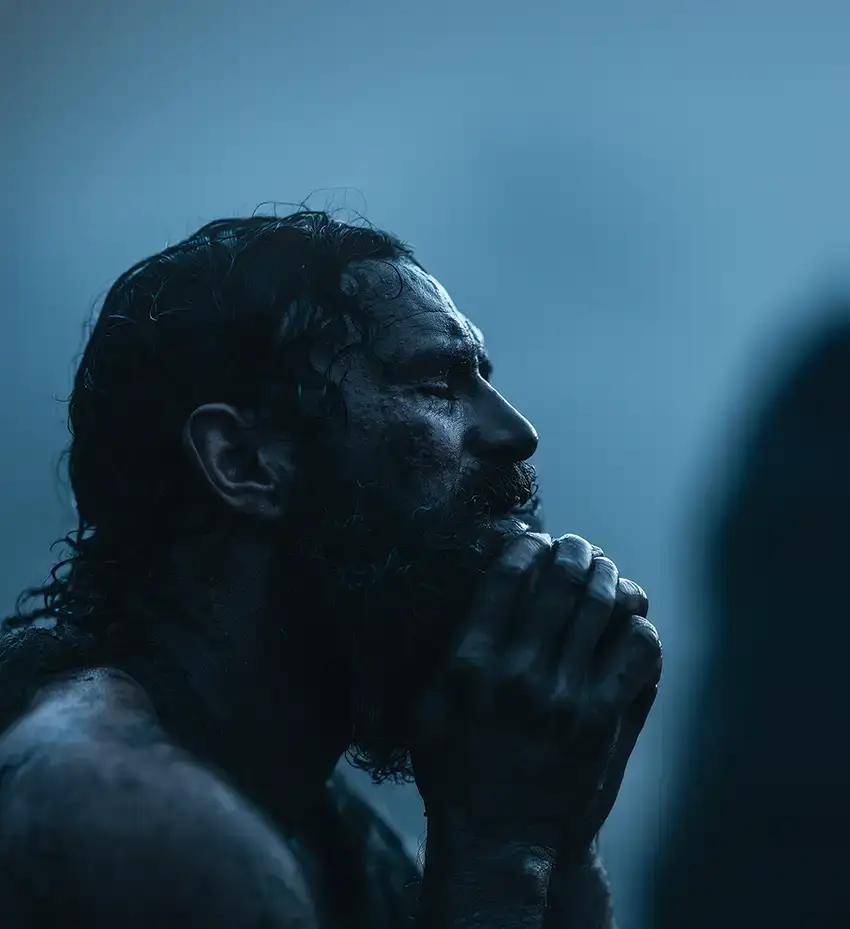
So you want to know about my family? You may have heard that I was an only child with an extraordinary story. In fact, I was born when my mother was well past the age of conceiving a child—yet that is exactly what happened.
Yes, there are all sorts of miracles in the Lord’s world. There are great miracles, such as the Flood in Noah’s day and the parting of the Red Sea, when Moses lifted his staff at the Lord’s command. But there are other miracles which can seem so small as to be inconsequential, miracles that are scarcely noticed by people nearby, never mind the whole world.
However, as time goes by, the small miracles may grow in significance—just like a small acorn, given enough time, can turn into a great oak. At rare times, the small miracles may become more meaningful than anyone could ever have imagined. I believe that, in just such a way, my improbable birth has made an impact upon many people, and will yet have even more impact after I am gone.
I say this in all humility: I am of no great importance. If my life has meaning, it is in this only: that the great Lord of the universe has somehow chosen me to advance His plan. I can say this because I believe another hardly-noticed miracle, much like mine but much more extraordinary, will soon come to the attention of all Israel, and one day to the whole world.
The Angel Gabriel
My story began like this, before I was even conceived: my father was a priest named after another priest, Zechariah, who was a great prophet in Israel. My father had been married to Elizabeth for many years, without children. It seemed that, during all that time, their fervent prayers for a child had been unheeded by Heaven. Only when my father Zechariah was nearing 50 years of age, the time when a priest retires from active duty, did an answer come to their prayers. One day, his turn came to offer incense in the Holy Place of the great Temple—an honor which comes very rarely in the life of a priest. But that day, something most unexpected occurred as soon as he left the worshipers outside and entered the Holy Place, to stand before the altar of incense.
As soon as Zechariah was out of sight of the others, he felt a strange presence in a place where ordinary people scarcely ever ventured. He told me it was difficult to describe because he was almost blinded by a great light, and had to avert his eyes. After a moment, his eyes adjusted to the brightness, and he could vaguely discern the outline of a man standing as though cloaked in the light. But he was not a man; he said:
I am Gabriel, the angel of the Almighty, and I bring you very good news! Your prayers have been answered, and your wife will have a son. You will call him John. His name means a blessing, and so he will bring a great blessing, not just to his parents, but to all Israel. Your son will prepare the way of the Lord by announcing the coming of the Messiah, the Savior of Israel.
My father told me that he expressed some doubt to Gabriel about the news. This wavering caused the angel to say,
Zechariah, I don’t want you to forget this message, or think that it was only a dream. I’ll give you a sign that you will not be able to ignore, that will remind you every day how real this message is: Try as you might, you will not be able to speak even one word until the child John is born.
It is such an irony, isn’t it? When Gabriel gave my father this special message, he reinforced it by telling him that he could not deliver it to anyone for nine months. Nevertheless, the unexplained silence itself became a sign that people noticed, which in turn made the message all the more memorable and appreciated when it came to pass. Truly, the Holy One uses the poor things to confound the rich, and the weak things (such as a man who cannot speak) to bring a new truth to Israel. All this, so that no man may boast before the Lord of heaven and earth.
My Education
As I grew up, my parents—now quite old and retired from most other activities—devoted themselves to instructing me. I learned so much in that way, not just about the facts of the Holy One and His great revelation, but also about the awe and wonder they had both experienced: the divine voice my father had heard and the divine touch that changed my mother’s body and her life.
As I matured, my mother spent time preparing my priestly garments for the great day when, like my father before me, I would take up the duties of a priest in the glorious Temple of the Most High God.
My father especially instructed me in the offices of the priesthood. Still, even though he was a wise and intelligent teacher, I could detect that the recitation of the details and rules of the position gave him no great pleasure. More and more, as I grew toward manhood, he would talk to me of the excesses of the high priests and their families and cronies. As he said, they should have been thankful and humble servants of the Divine One and diligent teachers of the masses, but sadly, they were, for the most part, corrupt, power-hungry, greedy, and immoral.
At other times, in our Scripture studies, my father and I read from the prophets and heard the words of the Lord through Jeremiah:
This house which bears my Name—hasn’t it become a den of robbers? I have been watching, declares the Lord… Therefore I will thrust you from my presence!
And the prayer of King Solomon, at the dedication of the first great Temple, in which he addressed the Holy One:
The heavens, even the highest heaven, cannot contain you. How much less this temple I have built!
And we wondered, if the greatest of all temples—the one built by Solomon—could not contain the Almighty, what use was a temple which thieves and other wicked men administered? Did the Lord indeed dwell in such a place? Or did He dwell in the individual hearts of those who sought Him in a true spirit of faith and repentance?
But especially, we focused on the words of another great prophet, Isaiah. From his writings, two special ideas emerged that proved meaningful to my father and me:
Where is the house my people will build for me? Where will my resting place be? Have not I made all these things?
Those words told us so much. Whatever kind of dwelling men might build to be the house of the Lord, it was really the Lord Himself who was building that house. After all, the house—whatever form it took—was made of materials which He had created, and constructed by workers to whom He had given life as well as the energy to build!
Isaiah’s words from the Lord came before us again:
This is the one to whom I the Lord will look; this is the one I will hold in esteem—the one who is humble and contrite in spirit, and trembles at my word.
The physical structure of a house of worship was as nothing compared to the man or woman, here or there, who actually stopped to listen, carefully and reverently, to the words of the Almighty! There was more real faith in one such person than in a great temple filled with greedy money-changers and immoral priests. And in the situation to which I, John the son of Zechariah, had been called, I now knew that I must be the one to go before the Messiah, and prepare others to hear his message of faith. Again, in the words of the great prophet, I must be:
The voice of one crying: “In the desert prepare the way for the Lord; make straight in the wilderness a highway for our God… And the glory of the Lord will be revealed, and all mankind together will see it.”
The more we considered such passages, the more we wondered: Should the forerunner expect to find the Coming One in Herod’s temple of wickedness? Or in the clean and pure air of the desert wilderness, in the wild spaces where God Himself spoke to Abraham and Moses and Elijah?
My mission was becoming clearer. The voice in the desert must dwell in that desert, and those who seek the Coming One must go out there, away from comfortable city and lavish temple. Strange as it might seem, the Lord Almighty was telling me that was where I should go and preach.
George Booker,
Austin Leander Ecclesia, TX
References:
The angel Gabriel: Luke 1:1-25; 1 Corinthians 1:27-29; Jeremiah 9:23,24.
My education: Jeremiah 7:11; 1 Kings 8:27; Isaiah 66:1,2; Acts 7:49; John 1:23; Isaiah 40:3.
My mission: Matthew 3:1-12; Mark 1:1-8; Luke 3:1-20.