Life After Baptism
A clear and honest look at life after baptism, showing that the Christian walk is not perfection but a continual return to God through grace.
 Read Time: 7 minutes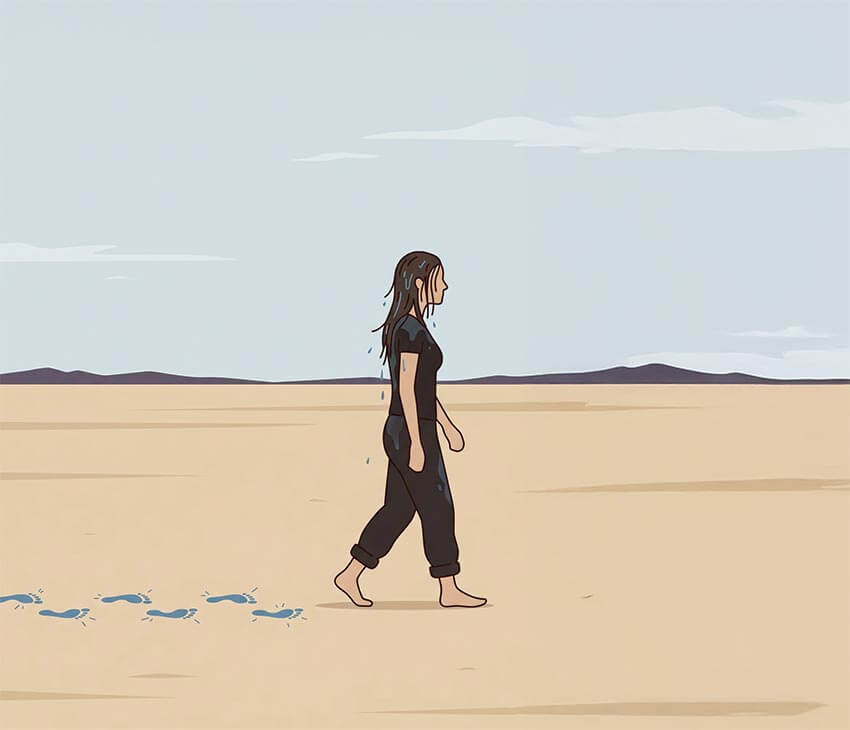
As a young person, I am privy to many conversations regarding baptism. I was baptized at age 13; however, many of my peers, with whom I grew up attending Bible Schools, youth weekends, and CYC activities, are in their early twenties and are not yet baptized. You see, there is an underlying current that committing to baptism means you’ve got it all sorted. That committing to baptism means you know your Bible from front to back. That committing to baptism means that you’ve come to the end of your spiritual journey, and that you are now “complete.” It is my impression that the weight of baptism has come to encompass the attitude that you can only be baptized if you are deemed knowledgeable, faithful, and “ready.” But hang on. While I do agree that baptism should not be considered lightly—that is, that baptism is an important, life-changing decision—I do not believe the decision to be baptized should be a heavy one. Baptism is the start of your journey, and if baptism means that you are spiritually complete, perfect, and without sin, then there would be but one person who would have ever been ready to be baptized—Jesus.
While I could talk about pre-baptism until the cows come home, I am going to take a different perspective and discuss the spiritual journey post-baptism. In his book The Way of Life, Rob J. Hyndman outlines seven key steps to accepting God’s gift of grace:
- Believing that God exists;
- Acknowledging that we are sinners;
- Repenting of our sin;
- Having faith that we can be saved through Jesus;
- Being baptized;
- Receiving forgiveness for our sins;
- Living a new life focused on God.
I’m coming to understand that the seventh step may frighten young people away from baptism. Within Christadelphia, there is little discussion regarding people’s struggles with sin post-baptism. Sure, there are plenty of personal testimonies discussing being of the world, turning to God, repenting, and being baptized. However, these accounts end here, with the literary metaphor of walking hand in hand with Jesus towards the sunset, with no further stumbling blocks along the way. This notion is absurd, for I have discovered firsthand that baptism does not clear your path of boulders, quicksand, potholes, and misleading signage. At 13 years of age, I was so sure of my faith, so determined that I would never stray from the path that would lead me to the Kingdom, and so convinced that I would know immediately if I were wavering from the path less traveled and turn back straight away. However, as only time can teach, I was so very wrong. The true path less traveled has many branches that look like the right way; sometimes we only discover later that the path we’re on is actually a wrong turn, surrounded by the world, and no longer walking hand in hand with Jesus. This reality is the true, unfiltered, unspoken journey that so many of us travel. We feel isolated, alone, and disheartened because we are unaware that, in the darkness, we are not alone but are instead surrounded by countless other believers fighting unseen battles against sin.
It is a fine line to walk. How do we as Christadelphians, without condoning sin, preach that we are not alone in our battles against temptation? How do we, as Christadelphians, help our fellow believers not feel isolated, ostracised, or judged for their trials? How do we as Christadelphians shift the stigma around sin so that it does not emphasize shaming the individual, but rather focuses on helping our brothers and sisters overcome temptation and sin? How do we simultaneously acknowledge that, post-baptism, you may fall away from your baptismal commitment to God, yet there is a way back to God?
I propose that of the seven key steps to accepting God’s gift of grace, steps two to seven are in fact not steps at all, but rather a cycle. This cycle commences with baptism and continues throughout our spiritual life in Christ. Step one is temptation:

Mark 7:21-23 reads “For from within, out of the heart of men, proceed evil thoughts… all these evil things come from within, and defile the man.” (KJV). Temptations come from within—they are our own thoughts. They are not placed in our minds by someone or something else, and we are wholly responsible for our own thoughts. Yet the things we surround ourselves with—people, activities, and environments—can influence our thoughts. Christ states, “Watch and pray, that ye enter not into temptation: the spirit indeed is willing, but the flesh is weak.” (Matthew 26:41). God yearns for us to ask for His help. He knows that, while our spirit is willing, left alone, we will succumb to the desires of the flesh. While God allows us to face temptation as a test of our faith and desire to serve Him, He prevents it from becoming too great for each of us. 1 Corinthians 10:13 reads, “No temptation has overtaken you except such as is common to man; but God is faithful, who will not allow you to be tempted beyond what you are able, but with the temptation will also make the way of escape, that you may be able to bear it.” (NKJV). So, remember, whatever temptation you are fighting against, you can overcome it with God’s help.
James 1:12-16 describes the pathway from temptation to sin and the final consequence of sin: death. Specifically, “Then, when desire has conceived, it gives birth to sin; and sin, when it is full-grown, brings forth death.” (James 1:15 NKJV). Sin is described as coming from three sources, “For all that is in the world, the lust of the flesh, and the lust of the eyes, and the pride of life, is not of the Father, but is of the world.” (1 John 2:16). John outlines that sin stems from acting on three categories of temptation: the cravings of our sinful nature, the lust of what we see, and the pride in what we have and what we do. Yet these sins are not exclusive to the unbaptized. Baptized brothers and sisters are equally as likely to be tempted in such ways, so how do we find our way back to the light?
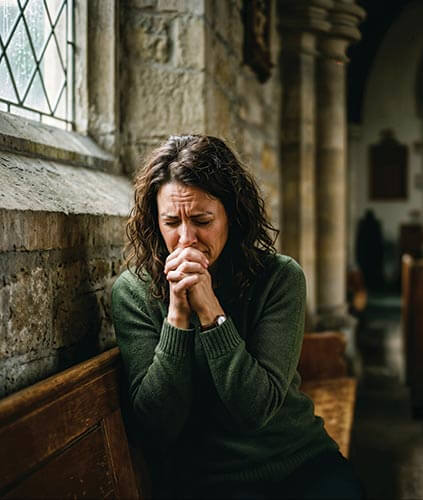
We must honestly recognize and acknowledge that we are sinners. Just as we humbled ourselves before God before baptism, admitting our iniquities, we must do so time and time again. No, we cannot use this as a get-out-of-jail-free card. “For if we sin wilfully after we have received the knowledge of the truth, there no longer remains a sacrifice for sins, but a certain fearful expectation of judgment, and fiery indignation which will devour the adversaries.” (Hebrews 10:26-27 NKJV). God will only forgive our sins if we reject sin wholeheartedly and follow His ways. “For all have sinned, and come short of the glory of God; being justified freely by his grace through the redemption that is in Christ Jesus.” (Romans 3:23-24). Yet, within Christadelphia, there remain some people who do not publicly acknowledge their iniquities, but rather raise themselves on pedestals and declare themselves sinless. 1 John 1:10 demonstrates the consequences of such behavior, reading, “If we say that we have not sinned, we make him a liar, and his word is not in us.” (KJV). To be of God, we cannot afford to present facades to our brethren. Humility matters. If we do not “become as little children,” then we “shall not enter into the kingdom of heaven.” (Matthew 18:3). We are instructed to humble ourselves before one another and before God and confess our iniquities honestly and with humility, as little children to their Father. We are further told that if we do this, “If we confess our sins, he is faithful and just to forgive us our sins, and to cleanse us from all unrighteousness.” (1 John 1:9). We may feel that our sins stain our past and present so thoroughly that it would be impossible to erase them. How often and easily can we take stains out of our own literal clothes, let alone our lives, so that our future is not tarnished? Yet Isaiah 1:18 rebukes this belief, saying, “Come now, and let us reason together, saith the LORD: though your sins be as scarlet, they shall be as white as snow; though they be red like crimson, they shall be as wool.” Upon true, honest, and heartfelt repentance, God removes the blemish of sin from our lives, metaphorically wiping our slate clean.
However, we are unworthy of salvation. We cannot earn it, no number of good deeds, words, time, or effort can scavenge us even a sliver of salvation. So, how are we saved? “For by grace are ye saved through faith; and that not of yourselves: it is the gift of God.” (Ephesians 2:8). Salvation is by grace through faith, not works. We must have faith that we can be saved through our Lord Jesus Christ.
It is through this repentance that faith is the saving grace of God, and God’s almighty and loving mercy that we receive forgiveness for our sins. Psalm 103:10-11 reads “He hath not dealt with us after our sins; nor rewarded us according to our iniquities. For as the heaven is high above the earth, so great is his mercy toward them that fear him.” God’s mercy is infinite; we must only repent, have faith, and receive complete and utter forgiveness. God does not keep score; He does not keep a tally. As it is written in Isaiah 43:25, “I, even I, am he that blotteth out thy transgressions for mine own sake, and will not remember thy sins.” God so loves us, His children, that He is willing to forgive and allow us to move forward free from the wages of sin and death.
Our Father calls us to live a new life in Him. A new life focused on Him. We are His forgiven children, and He calls us to live out lives of forgiveness and mercy in His name. Matthew 18:23-35 tells the Parable of the Unforgiving Servant, encouraging us to live transformed lives that reflect the forgiveness we have received. We cannot be hypocrites; we cannot sit on high horses of judgment; we cannot call out the speck in another’s eye when we have a log in our own. We must act with mercy and grace, forgiving and guiding our brethren towards the Kingdom together, hand in hand with Jesus.
Yet, as is our nature as humans, we will again be tempted. We will, yet again, sin. But if we continue to be honest, with love for our Father, His son, and our brothers and sisters, if we acknowledge that we are sinners, repent, and have faith in the saving name of Jesus Christ, we will be forgiven, and we will be given the opportunity to live our lives committing to God. We are all climbing a mountain to the Kingdom of heaven, going against our own human nature to reunite with our Father. Even an overall uphill, when zoomed in, is expected to have small downhills. These downhills are not failures if we are committed to continuing to climb up, up, up towards that glorious sight. Our lives are a process, a cycle, and throughout our years, as we continue to refocus, we continue to draw closer and closer to Christ.
Therefore we also, since we are surrounded by so great a cloud of witnesses, let us lay aside every weight, and the sin which so easily ensnares us, and let us run with endurance the race that is set before us, looking unto Jesus, the author and finisher of our faith, who for the joy that was set before Him endured the cross, despising the shame, and has sat down at the right hand of the throne of God. (Hebrews 12:1-2 NKJV).
Emily Hocking,
Brisbane Ecclesia, QLD
Really uplifting article – thank you. A bit mystified by the comment that there are bre & sis who consider themselves sinless …I have never met any brother or sister who says that ….
Thank you very much, Sister Emily, for expressing these principles of God, so eloquently, but yet so plainly. Prayer along our journey to the Kingdom is such an encouragement for us. Our Loving Heavenly Father knows us all by name and is there to help us in our times of need. Gratitude for our daily blessings that He provides is so very important. Let us always be thankful for the wonderful Hope that we have.