Christ Lives Today
Would you die for Christ? This article examines the historical evidence for Jesus’ life, death, and resurrection and why that truth transforms sacrifice into living hope.
 Read Time: 4 minutes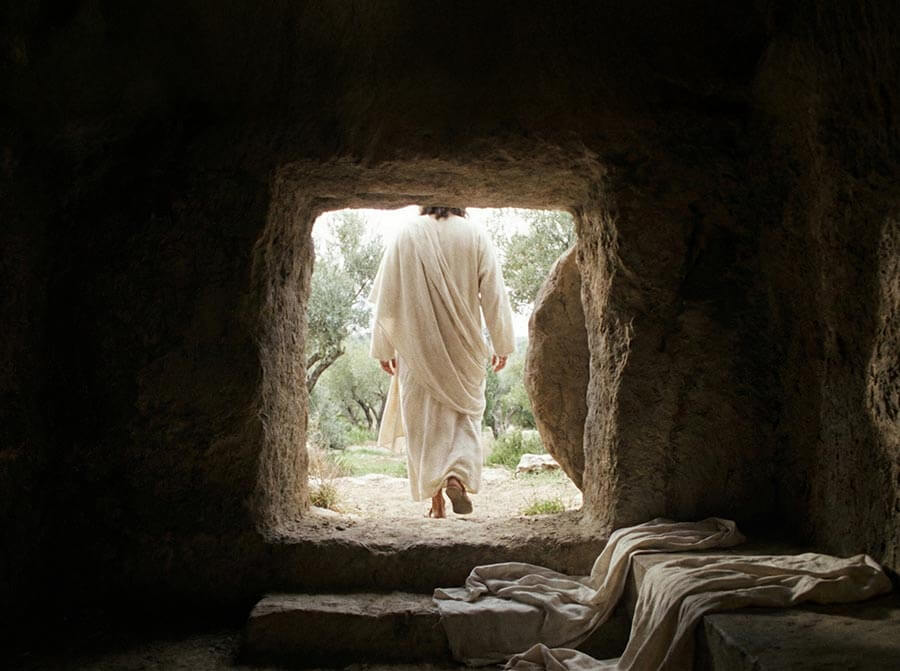
Would you die for Christ? Many have. Throughout history, believers have held to his name at the cost of their lives. If the resurrection of Christ had never occurred, then their sacrifice would have been in vain. They died for a hope that wasn’t real. Whether those people are heroes of faith or foolish daydreamers depends on one thing: the truth of the resurrection. It all comes down to the credibility of his existence, his death, and what happened three days later.
For years, scholars and historians have questioned the details of Jesus of Nazareth, but today, nearly all experts—Christian and non-Christian—agree that he was a real man. Even atheist and agnostic scholars have admitted the evidence is undeniable. Bart Ehrman, an agnostic New Testament historian, wrote, “He certainly existed, as virtually every competent scholar of antiquity, Christian or non-Christian, agrees.”1 Not a single ancient source speaks of Christ as a fictional creation.
When historians evaluate the credibility of a historical figure, they use three main criteria: the number of sources, the time gap between the sources and the events they describe and the nature of each individual source—hostile, friendly or neutral. By all three standards, the evidence for Jesus is overwhelming. We have multiple accounts, both Christian and non-Christian, written by individuals in a strong position to know the facts. The evidence we have for Jesus is so strong that to deny his existence would mean doubting many other well-accepted historical figures, such as Alexander the Great.
Most historians agree that Jesus’ crucifixion was under Pontius Pilate, but some have questioned the certainty of his death. A theory often referred to as the “Swoon Theory” holds the opinion that Jesus did not die on the cross but merely fainted or went into a coma and later recovered. However, when examined in light of history and medical facts, this theory doesn’t hold up.
Before crucifixion, the Romans flogged Jesus with a flagram, a whip covered in metal and sharp bones that tore into the muscle and caused severe blood loss. This torture alone would have been enough to bring Jesus one step away from death. On the cross, they drove nails through Jesus’ wrists and feet. Every breath Christ took required him to push against those nails, tearing them through his flesh until they hit bone. He would have been exhausted and slowly suffocating from the challenge of continuously raising himself up to breathe. Medical experts note that the “blood and water” described in the Gospel accounts would indicate a ruptured heart or fluid buildup in the chest cavity—clear signs of death.
Roman soldiers were professionals. They knew how to kill people and making a mistake in judgment would possibly endanger their own lives. The idea that Jesus survived crucifixion, escaped 75 pounds of burial spices and wrappings, rolled away a huge stone, avoided armed guards, and then managed to convince anyone he had conquered death—while severely wounded—is not historically or physically possible. It is clear that Jesus died on the cross.
That brings us to the biggest question of all: what happened three days later? The truth is, we cannot prove beyond any shadow of a doubt that Jesus rose from the dead, but the facts we do have create a remarkable picture. Many people claimed to have seen Jesus alive after the crucifixion. In fact, they were so convinced of this that they willingly gave up their lives upholding the idea. They didn’t gain any wealth, fame, or earthly reward as a result. Most were despised and rejected because they refused to deny what they had seen. People usually don’t die for what they know is a lie.
If the resurrection story was a lie, it was a foolish one. The disciples claimed that their savior died on a cross—an incredibly shameful death in the eyes of the Jews (Galatians 3:13). The Greeks felt the whole idea of resurrection was ridiculous. They believed the mortal body was something to escape, not reclaim. According to the disciples, the first people to witness the empty tomb were women, but societally, their testimony wouldn’t have been accepted as reliable at the time. No one aiming to sell a story in the first century would choose those details, unless they were telling the truth.
Furthermore, it is almost certain that Jesus’ tomb was found empty. Critics have come up with various alternative explanations (a stolen body, the wrong tomb, mass hallucinations), but none of these accounts for all the facts. When the evidence is weighed fairly, it seems evident that the resurrection of Christ is the most logical explanation.
The facts indicate that Jesus of Nazareth lived, died, and rose again on the third day. If Christ truly rose, we can rely on the promises he made to us—including his promise of life. In his own words, “Because I live, you also will live.” (John 14:19 ESV). With his resurrection, we can stand firm in our hope for the future. The worst the world can do to us is destroy our body (Luke 12:4). Death is not the end, and the grave no longer has the final word. Just as Christ rose from the dead; we, too, can be raised with him. So perhaps the question is not, “Would you die for Christ?” But, “Will you live for Christ?” Choose to live every moment in dedication to Christ, knowing that it is only through him we can have life.
Kyla Abel,
Grand River Ecclesia, ON
- Bart Ehrman, Forged: Writing in the Name of God (San Francisco: HarperOne, 2011), 256.