Power Breaks. Service Builds.
True leadership isn’t about control or title it’s about humility, courage, and sacrifice. Three powerful biblical examples remind us what it really means to lead in God’s household.
 Read Time: 8 minutes
While there are a plethora of lessons to learn and exhortations to give in today’s New Testament reading in Mark 12, I couldn’t help but notice the clear theme of leadership throughout all three daily readings (1 Kings 12, Jeremiah 38, and Mark 12). These lessons about leadership and authority stand out as valuable insight in our work and spiritual lives.
Taking a look at my own work, I notice a lot of overlap with how I run my business and my spiritual walk before God. Many of the spiritual lessons I learn affect how I interact with customers, vendors, laborers, and others. And the same can be true vice versa. There are values in business ethics that carry over to my spiritual walk. Just as we go to study weekends to invest spiritually and enjoy fellowship, I also attend boot camps and training sessions, and use coaching and consulting for various business topics such as marketing, workflow, systemizing, and leadership. One of the trainings I attended some years ago focused on the difference between being a boss and a leader in your company. There’s a really profound difference between the two. A boss drives others from a position of authority and expects obedience simply because of their title. Their focus is on control, and the tone is often “Go do this.” A leader, on the other hand, walks alongside those they influence. They don’t rely solely on authority. They earn respect by example. A true leader inspires others to follow, not by demanding it, but by demonstrating it. The spirit is not “You go,” but “Let’s go, together.” One shoves from behind like the commander of a chariot whipping the horses; the other leads from the front, saying, “I won’t ask of you anything I wouldn’t do myself.”
Today, in our readings, we encounter some striking contrasts in the examples of those in power, illustrating two distinct approaches to leadership, authority, and influence. One way is fueled by pride and self-importance. It demands control, it refuses correction and ultimately brings division and destruction. The other way is quiet, often unseen, and rooted in humility. It puts others first and, because of that, it actually builds and preserves the household of God.
Before we dive into my thoughts, I want to ask you to ask yourself something: “When God gives me influence, even in small things, do I use it to serve others or to serve myself?”
We are all leaders in some capacity. In our homes. In conversations. In the ecclesia. Even with our tone and our attitudes. And the difference between power-leadership and servant-leadership isn’t merely theoretical; it’s in fact painfully practical.
Rehoboam (1 Kings 12)
At this point, Solomon is dead, and Israel stands at a crossroads. Although it enjoyed 40 years of peace and prosperity, the nation is burdened. Solomon had invested heavily in national growth and expansion, and Israel’s prosperity during his reign actually came at a massive cost to the people:
- Heavy taxation: Solomon levied significant taxes on the people to fund the temple, his palace, and a wide range of public building projects (fortified cities, military outposts, infrastructure; 1 Kings 4:7; 1 Kings 5:13-14).
- Forced labor and conscripted work crews: 1 Kings 5:13-14 tells us Solomon “raised a levy out of all Israel,” 30,000 men drafted to work for a month at a time in Lebanon and other regions. There were also 70,000 “that bare burdens” and 80,000 “hewers in the mountains.” (1 Kings 5:15). These were Israelites put into mandatory service for the king.
- Administrative burden: Solomon divided the land into 12 districts, each of which had to provide food and supplies for the royal household for one month each year (1 Kings 4:7-19). In other words, the people had to continually maintain the king’s luxurious lifestyle.
The people tolerated this in the early years because God clearly blessed Solomon, and the nation flourished. But by the end of his reign, the people were tired. So, when Rehoboam came to the throne, they asked for a lighter yoke (1 Kings 12:4).
Rather than showing compassion for a people who had carried the weight of his father’s ambitions, Rehoboam doubled down, triggering the split of the Kingdom. The people came to Rehoboam and pleaded: “Thy father made our yoke grievous: now therefore make thou the grievous service of thy father… lighter, and we will serve thee.” (v. 4). This situation was not a rebellion. It was a request for mercy from the new king. They said, “We want to serve you! Just cut us a little slack to regain our footing.” So, Rehoboam sought advice. And here is the turning point.
And King Rehoboam consulted with the old men… And they spake unto him, saying, If thou wilt be a servant unto this people this day… then they will be thy servants forever. (1 Kings 12:6-7).
It could not be clearer: the elders actually say, “Be a servant… and they will follow you.” But that is precisely what Rehoboam refused to do. See his action:
But he forsook the counsel of the elders which they had given him, and consulted with the young men who grew up with him and served him. The young men… spoke to him, saying, “But you shall speak to them… ‘My little finger is thicker than my father’s loins! Whereas my father loaded you with a heavy yoke, I will add to your yoke; my father disciplined you with whips, but I will discipline you with scorpions.’” (1 Kings 12:8-11 NASB).
Notice the spirit behind it. It’s one of pride. One of harshness. One of self-assertion. He believed authority was to be exerted over others, not used for others. Just like that, the Kingdom of God split. Look at the consequences in verse 16 (NASB):
When all Israel saw that the king did not listen to them, the people answered the king, saying, “What portion do we have in David? We have no inheritance in the son of Jesse; to your tents, O Israel! Now look after your own house, David!”
Brothers and sisters, this isn’t just a lesson for kings. It’s a lesson for every father. Every mother. Every brother or sister who serves in any capacity in the ecclesia or out of it.
Ask yourself honestly:
- Do I listen to counsel—or justify myself?
- Do I surround myself with people who challenge me, or only those who already agree with me?
- Do I “double down” when someone disagrees—because I don’t want to appear weak?
Rehoboam’s failure wasn’t doctrinal. It wasn’t because of false worship. We see that kind of failure later in the chapter, when Jeroboam created an apostate worship in the Northern Kingdom. Instead, Rehoboam’s failure stemmed from his refusal to humble himself and serve. And if we’re not careful, we can destroy relationships in the same way, simply by insisting on our way.
Ebed-Melech (Jeremiah 38)
Now we come to Jeremiah 38. Jerusalem was under siege. The leaders were panicked. Jeremiah was preaching an unpopular message: “Submit to God’s judgment, and you will live.”
Because of that, verse 6 tells us:
Then took they Jeremiah, and cast him into the dungeon… and in the dungeon there was no water, but mire: so Jeremiah sunk in the mire.
The prophet of God, up to his waist in mud, slowly dying alone in the dark! It was silent and pitch black. He could hear the sound of his own heartbeat. And everyone remained silent, except for one man. Ebed-Melech courageously went before the king and said:
My lord the king, these men have acted wickedly in all that they have done to Jeremiah the prophet whom they have cast into the cistern; and he will die right where he is because of the famine, for there is no more bread in the city. (Jeremiah 38:9 NASB).
He risked his own position. He spoke the truth. But, he didn’t stop there. Verses 11-13 state that he personally led the rescue. He brought ropes, and even old clothes and rags, so Jeremiah’s underarms would not be injured as he was pulled out.
Brothers and sisters, that is servant-based leadership. No authority. No recognition. Just compassion, courage and action. And don’t miss this: God noticed. In the next chapter, Jeremiah was sent back specifically to Ebed-Melech (Jeremiah 39:15-18). God said: “I will deliver thee… because thou hast put thy trust in Me.” No one else in the entire city received a personal message like that. Reflect for a moment:
- Do we step in when someone is struggling, or stay silent and out of the way?
- Do we quietly help when someone is sinking? Or assume “Someone else will handle it.” “Their family or closer friends are probably helping and supporting them.”
- Would God look at us and say, “You trusted Me, you acted when no one else would”?
- What is true leadership, real spiritual leadership?
It isn’t loud. It’s sacrificial.
Christ (Mark 12)
In Mark 12, the Lord Jesus did something remarkable. He exposed the same pride Rehoboam had in the religious leaders of the first century. He said,
Beware of the scribes, which love to go in long clothing, and love salutations… and the chief seats. (Mark 12:38-39).
They presented themselves as spiritual men, but they “devour[ed] widows’ houses.” They wanted the position, not the burden of serving (Mark 12:38-40). Then Christ immediately pointed to a complete contrast: the poor widow.
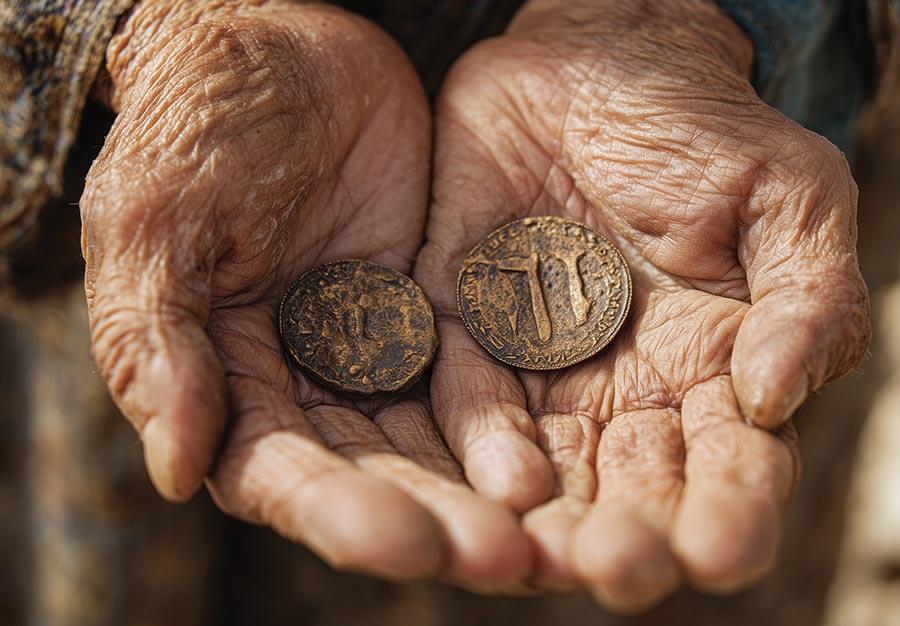
A poor widow came and put in two small copper coins, which amount to a cent. Calling his disciples to him, he said to them, “Truly I say to you, this poor widow put in more than all the contributors to the treasury; for they all put in out of their surplus, but she, out of her poverty, put in all she owned, all she had to live on.” (Mark 12:42-44 NASB).
She had no title. No influence. No one even noticed her. But she gave “all that she had, even all her living.”
That is just like Ebed-Melech again—quiet, unseen, self-sacrificial devotion. Earlier in the chapter, the Lord laid down the absolute foundation of all true leadership: “Thou shalt love the Lord thy God with all thy heart… and thy neighbor as thyself.” (vv. 30-31). That is servant-leadership in two sentences: complete devotion to God and concern for others.
And brothers and sisters, the Lord did not just teach it—he lived it. When we examine the life of the Lord Jesus, we see that his entire ministry was characterized by the posture of a servant.
- He touched the leper when everyone else stepped back (Mark 1:40-41).
- He sat with publicans and sinners when the religious elite wanted nothing to do with them (Mark 2:15-17).
- He took time for children, even when the disciples tried to send them away (Mark 10:13-16).
- He fed the hungry multitudes, even though he himself was weary (Mark 6:31-44).
- He washed his disciples’ feet, performing the lowest household task (John 13:3-5).
- He carried the cross, even though it was our burden and not his (John 19:17).
- He prayed for Peter’s faith, knowing Peter would deny him (Luke 22:31-32).
- He healed the servant’s ear in Gethsemane, while being betrayed and arrested (Luke 22:50-51).
- And even in his dying breath, he interceded for his enemies, saying, “Father, forgive them.” (Luke 23:34).
Over and over again, he put other people’s needs above his comfort, reputation, and even his life. That is the pattern of servant-based leadership. And that is the pattern he expects us to follow. Furthermore, he said: “The Son of man came not to be ministered unto, but to minister, and to give His life a ransom for many.” (Mark 10:45). That is the king we claim to follow.
So the question is this: which spirit governs our thinking? That of:
- Rehoboam: demanding, defensive, unwilling to listen?
- Ebed-Melech: humble, faithful, willing to step in when needed?
- Christ: selfless, sacrificial, even unto death?
Brothers and sisters:
- In our marriages, do we lead with pride or serve in love?
- In the ecclesia, do we push for our opinion, or do we look for ways to quietly help?
- In our everyday interactions, do we need to be heard, or are we willing to listen?
Where pride reigns, the kingdom divides. When servants act in love, the kingdom grows and flourishes. Let us remember the Apostle Paul’s words to the Philippians:
Let this mind be in you, which was also in Christ Jesus… [who] made himself of no reputation, and took upon him the form of a servant. (Philippians 2:5-7).
May we put away the spirit of Rehoboam, walk in the footsteps of Ebed-Melech and above all, follow the example of our Lord and Master, the King, who became a servant. We’ve come here this morning to remember him so we might share his glory one day.
Tim Pommer,
Pittsburgh Ecclesia, PA