Thankfulness
This article draws us back to Christ, showing how a spirit of gratitude sustained him through suffering and why that spirit must shape our lives today.
 Read Time: 6 minutes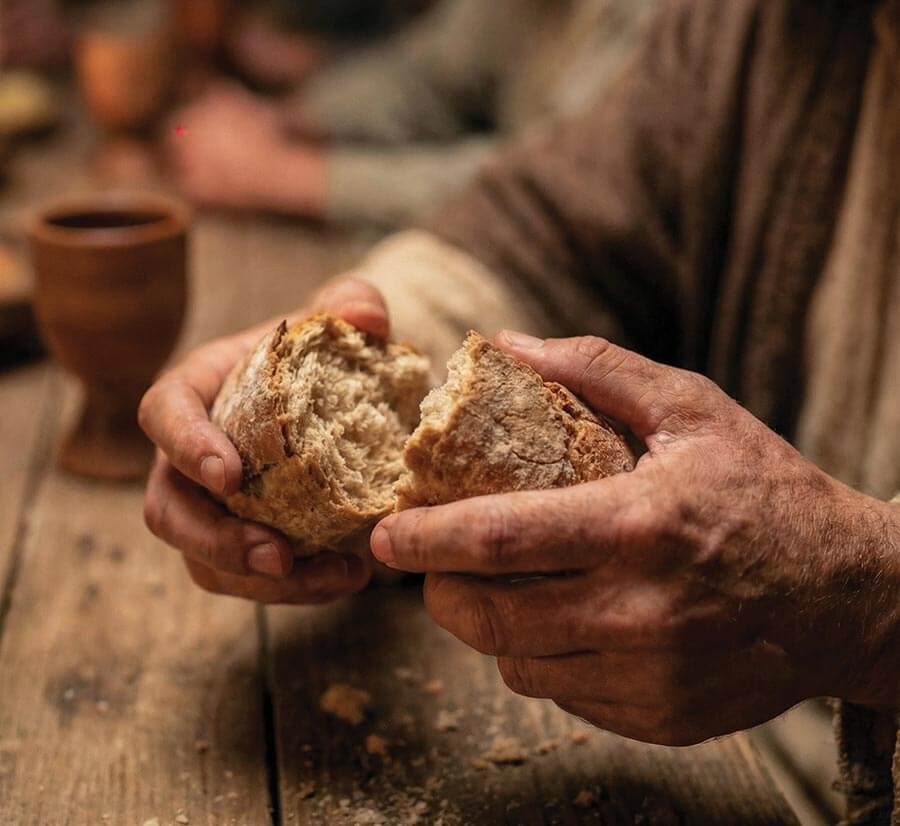
Each week, as we “eat this bread and drink this cup” (1 Corinthians 11:26 NKJV), we are taken back to the night when our Lord gathered with his disciples and memorialized the power of his life, death, and resurrection. Among the many lessons Christ demonstrated, one shines out. This lesson was the spirit that governed his whole life, a motivating force so simple we may overlook it. All accounts tell us that when Christ shared the emblems, he “gave thanks.” (Matthew 26:27; Mark 14:23; Luke 22:17).
We, too, “give thanks” before eating or drinking. But routine can dull the significance. Christ’s words were anything but ordinary. He gave thanks for symbols that represented his body, soon to be tortured, crucified, and lifted up on a tree, and his blood poured out in complete surrender to God. They spoke of the greatest conflict ever fought: the battle with sin and death within himself. And he gave thanks, knowing this was the path “for the remission of sins,” and as Paul adds, “for you.” (1 Corinthians 11:24). Christ thanked his Father for what those emblems meant, for him and for us.
This thought reveals the remarkable power behind Christ’s example. Thankfulness was not merely an action; it was the spirit that governed his entire life. He lived with a deep appreciation for his Father’s love, wisdom, and purpose. Even as he approached his darkest hour, he did so with gratitude.
John’s Gospel opens a window into his mindset. “Jesus knew that his hour was come.” (John 13:1). Yet even then, although he was the greatest of them all, he could “empty himself” (Philippians 2:7-8 YLT), lay aside his garments, gird himself with humility, and wash their feet. Yet how could Christ set aside his own needs at such a moment? John 13:3 gives the answer: “Jesus knowing that the Father had given all things into his hands, and that he was come from God, and went to God.” Jesus knew that God was to be thanked for everything; he saw all things in the light of God’s will. He knew his Father’s plan was perfect, that every step, even suffering, was leading to the triumph of God’s righteousness and the salvation of the world. And so, he gave thanks.
This spirit is embedded throughout Scripture, but nowhere more beautifully than in Psalm 116. It begins with the words, “I love the LORD.” That love springs from thankfulness: “because He has heard my voice and supplications.” (v. 1 NKJV). The psalm also carries strong Messianic undertones, giving voice to the spirit of Christ (1 Peter 1:10-11). In Psalm 116:12, we hear the question Christ himself embodied: “What shall I render unto the LORD for all His benefits toward me?”
Psalm 116:13 draws us straight into the upper room: “I will take the cup of salvation.” Christ took that cup and gave thanks for it. Although he knew it signified the suffering ahead, he thanked God for the salvation it would achieve. The cup testified not only to what he must endure, but also to “the glory that should follow.” (1 Peter 1:11).
The second half of Psalm 116:13 leads us into Gethsemane, where he called “upon the name of the LORD.” As the agony intensified, his sweat falling as great drops of blood, he remained thankful for the angel sent to strengthen him and set before him the joy of being exalted to the Father’s side. Here, the decisive battle was won. He “kneeled down and prayed;” (Luke 22:41). This is the same Greek word used in John 15:13, where he taught there was no greater love than for one to “lay down” his life for his friends. Although the disciples would soon forsake him, he was thankful that his Father never would.
From the garden, he rose to face trials before Jew and Gentile. Psalm 116:14 captures this moment as he paid his “vows unto the LORD now in the presence of all His people.” Amid false accusations, mocking, and scourging, the psalm continues to remind us that he remained thankful for the privilege of fulfilling his Father’s purpose and upholding divine righteousness before the world.
Verse 15 brings us to Golgotha: “Precious in the sight of the LORD is the death of His saints.” Christ trusted his Father’s abiding love, and the Gospel records show how each prophecy was fulfilled with divine precision (compare Matthew 27 with Psalm 22 and Isaiah 53). Even in death, he saw the Father’s presence, a truth for which we too can be deeply thankful.
The psalm then reaches its climax in the resurrection, when God “loosed my bonds.” (v. 16). No wonder verse 17 describes the whole journey as a “sacrifice of thanksgiving.” Christ’s thankful spirit carried him through suffering and now, in verse 16, bursts forth in the glory of immortality and the hope of the Kingdom.
If the spirit of thankfulness lies at the heart of the emblems and governs how we remember “the Lord’s death till he come,” (1 Corinthians 11:26) how much more should it govern our lives? This exhortation becomes increasingly urgent in our current age. Ours is a thankless generation, a world filled with voices that complain, resent, demand, and constantly compare. People measure life by what they lack rather than what they have. Even disciples can slowly slip into seeing life through the lens of absence rather than abundance.
Paul describes the spirit of the world in Romans 1:21: They “became vain in their imaginations, and their foolish heart was darkened,” because they were not thankful. And to Timothy, he warns that in the last days, even within the household of faith, people would be “unthankful.” (2 Timothy 3:2). The seriousness of this description is underscored by the phrases around it: “unholy” and “lovers of pleasures more than lovers of God.” (2 Timothy 3:4). Unthankfulness is not a minor flaw; it is the opposite of the spirit of Christ.
Paul, writing to a generation living on the brink of the AD 70 “coming” (parousia), drew heavily from the wilderness generation in Hebrews 3. They, too, stood on the edge of the Promised Land. They had seen God’s works for forty years, eaten manna from heaven, and drunk water from the rock. Yet the exhortation was an urgent warning. Despite all they had experienced, they “fell short” through unbelief. Hence the repeated call: “To day if ye will hear His voice.” (Hebrews 3:7).
Psalm 95, quoted in Hebrews 3, draws attention to two specific incidents: Massah and Meribah (Exodus 17:7 and Numbers 20:13, 24). Both involved Israel complaining about water, focusing on what they lacked rather than what God had already provided for them. In their ingratitude, they became blind to the truth. Paul reminds us in 1 Corinthians 10:4 that the rock Israel struck was a symbol of Christ. Their unthankfulness meant they “struck Christ” again, failing to recognise the grace before them. The warning is unmistakable: when we stop being thankful, we stop seeing Christ.
Paul’s quotation of Psalm 95 is a masterstroke of divine inspiration, because the antidote lies in the first two verses of the psalm: “O come, let us sing unto the LORD: let us make a joyful noise to the rock of our salvation. Let us come before His presence with thanksgiving.”
Thankfulness is the medicine for our age. It opens the door into God’s presence: “Enter into His gates with thanksgiving,” (Psalm 100:4), the very place, the courts of God’s house, where Psalm 116 ends (v. 19).
Here is the power of the emblems before us. The spirit of Christ is a spirit of thankfulness. Scripture repeatedly urges us to cultivate it: “By him therefore let us offer the sacrifice of praise continually… giving thanks to His name.” (Hebrews 13:15). “Let the peace of God rule in your hearts… and be ye thankful.” (Colossians 3:15). “Give thanks in all circumstances; for this is the will of God in Christ Jesus for you.” (1 Thessalonians 5:18 ESV). What power is behind Paul’s words, “Give thanks in all circumstances”? Thankfulness is not occasional; it is central to God’s work in us. It keeps Christ before our eyes and softens our hearts so the word can take root.
Scripture also reminds us to be thankful for one another. Paul repeatedly expresses thanks for ecclesias and individuals: “We are bound to give thanks always to God for you, brethren beloved of the Lord.” (2 Thessalonians 2:13). Gratitude strengthens fellowship and promotes unity. When we thank God for our brethren, we see not their shortcomings but the grace at work within them.
Above all, gratitude flows from recognising God’s greatest gift: “Thanks be to God for His unspeakable gift.” (2 Corinthians 9:15). We see that gift symbolised in the emblems before us. So, in the “same manner,” (1 Corinthians 11:25) the same thankful manner, let us eat this bread and drink this cup, remembering the one who gave thanks even as he gave his life.
“Thanks be to God, who gives us the victory through our Lord Jesus Christ.” (1 Corinthians 15:57 NKJV).
“Even so, come, Lord Jesus.”
James McCann,
Riverwood Ecclesia, NSW