You Are Not Alone
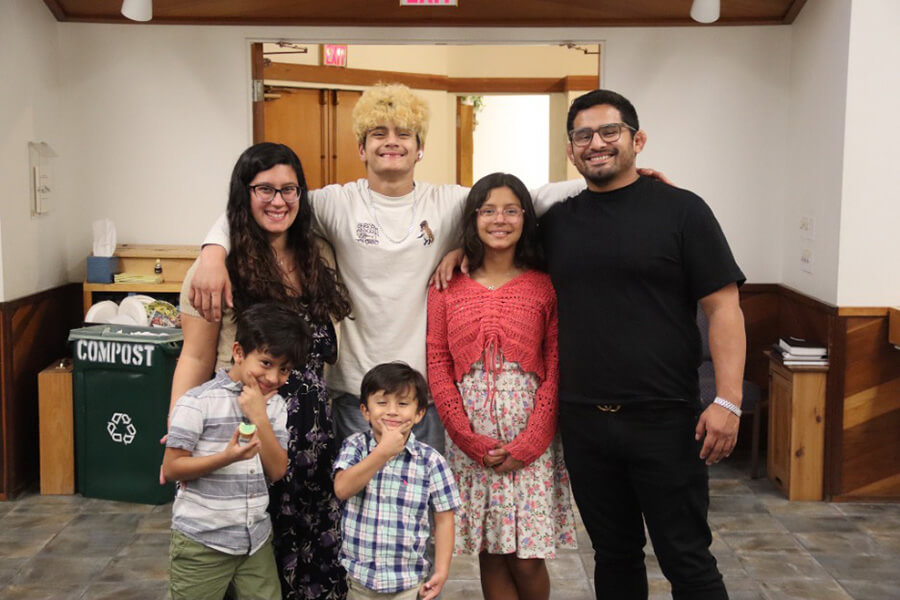
Isabella and Julio Sotomayor reflect on God’s patient hand at work in their marriage and an ecclesial family that never gave up on them.
 Read Time: 4 minutes
I grew up in a home where religion was not only absent but openly discouraged. My mother was a single parent who carried deep wounds from her own childhood. Her mother had moved between religions, immersing herself fully each time, often leaving my teenage mother to care for her six younger siblings in Brazil. Faith, to my mother, represented instability and disappointment.
She believed in spirituality, loved ancient Egypt, and explored what she called “witchcraft.” Yet despite all of this, I grew up with a quiet, aching emptiness I couldn’t explain. For a long time, I thought it was because I grew up without my father. Only later did I realize it was something deeper—I was missing my Heavenly Father.
As a child, I was occasionally exposed to Christianity. A friend’s father would let me sleep over, with one condition: I had to attend church with them on Sunday mornings. I enjoyed the stories, but no one explained why they mattered. When I spent summers with my Catholic relatives, I asked questions—only to be told that questioning was rude. So I stopped asking, and the emptiness remained.
Years later, while dating the man who would become my husband, I was invited—almost casually—to attend a Sunday meeting with him. He had grown up around the Christadelphians, attending the LA Hispanic Ecclesia with his uncle and cousins. As a boy, he was mischievous and rebellious. Still, there was always one constant: a sister named Jean, whose Sunday School classes at the ecclesia were always open, whose cookie jar was always full, and whose kindness never wavered.
That first meeting didn’t feel life-changing—but it planted a seed.
Soon after, my life took a sudden and frightening turn. I became pregnant with our first child and was forced to return to Brazil, alone and overwhelmed, surrounded by family I barely knew. Fear became a daily companion. My Catholic grandmother gave me a novena and a Bible, and while I didn’t fully understand either, they became a source of comfort.
During that time, a sister from the ecclesia sent me Sunday School books. I began studying them on my own—slowly, carefully—and for the first time, the Bible made sense. Not emotionally, not symbolically, but logically. God’s purpose felt real. Grounded. Steady.
When I returned to the United States, I began attending meeting regularly and started baptismal classes. In 2015, I was baptized.
Marriage came early for us. We were young, with limited wisdom and very different spiritual timelines. While I had made a commitment to God, my husband had not—at least not yet. Raising children while standing in different places spiritually was difficult. There were moments of tension, loneliness, and uncertainty. Faith shapes how you see responsibility, sacrifice, and purpose, and when those lenses don’t match, marriage requires extraordinary patience.
What sustained me during that season was the quiet strength of my ecclesial family—especially the sisters. Women who showed up without judgment. Who listened. Who prayed. Who reminded me, gently and consistently, that God works in His own time.
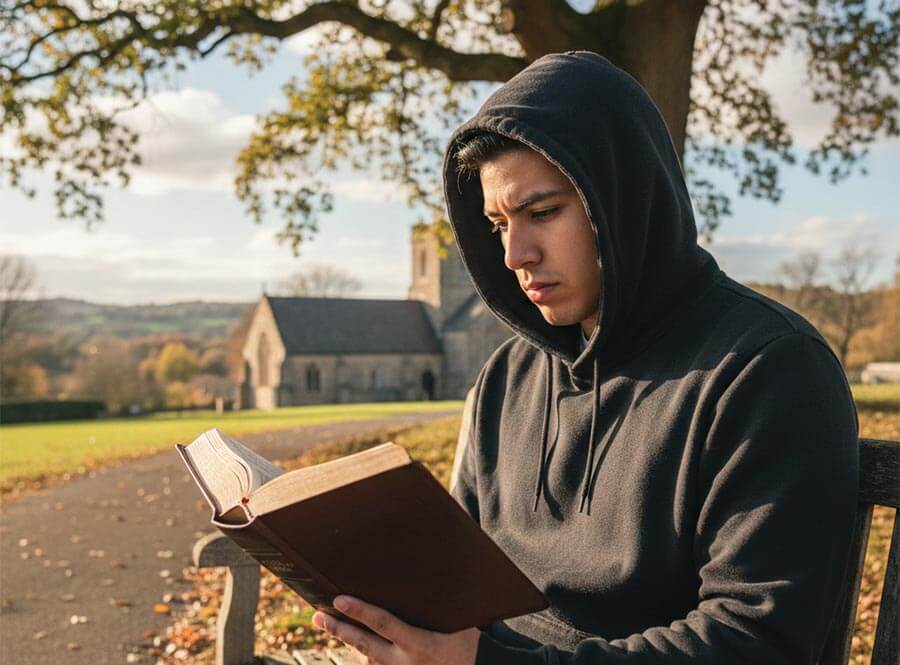 My husband’s journey was unfolding more slowly, but no less sincerely.
As a teenager, he was deeply rebellious. He believed he knew better than anyone else and often paid the price for that confidence. In his darkest moments, when life felt directionless, he reached out to a few people from the Truth—Jean among them. She never pushed. Never pressured. She simply reminded him again and again: “Look to the Bible. Look to the Word of God.”
For a time, he did. He began the daily readings and noticed something unexpected: change. Not instant transformation, but gradual shaping. Within a year, our family was reunited. Character was being built, day by day.
But life is relentless. Work, responsibility, and the weight of providing slowly pushed spiritual discipline to the margins. The world crept back in. Old habits resurfaced. It took years—and hard lessons—for him to recognize that partial commitment was not enough.
Having trained in martial arts for most of his life, he understood the value of physical and mental discipline. But Scripture taught him something deeper: strength of character. Loyalty, faithfulness, endurance. Eventually, he realized the only way forward was full commitment.
Ten years after my baptism, he was finally baptized.
Since then, we’ve learned that baptism is not the end of the journey—it is the beginning. Faith does not remove struggle; it gives it meaning. Marriage does not become effortless; it becomes purposeful. Raising children does not get easier; it becomes sacred work.
Looking back, we can see God’s hand clearly—in the timing, in the people placed in our lives, in the patience we were shown when we least deserved it. We are especially grateful for an ecclesial family that walked with us through uncertainty, growth, and reconciliation.
Our story is not one of perfection. It is one of persistence. Of God’s long patience. Of seeds planted early, watered slowly, and grown in His time.
And if there is one thing we hope this story communicates, it is this: you are not alone. Every believer has a journey shaped by struggle. Every marriage requires grace. And God is faithful—far more faithful than we often realize.
Isabella Sotomayor
with Julio Sotomayor,
San Diego County Ecclesia, CA