A Year in the Word
Various contributors reflect on a year shaped by Scripture, sharing voices and experiences that encourage sustained engagement with God’s Word.
 Read Time: 13 minutes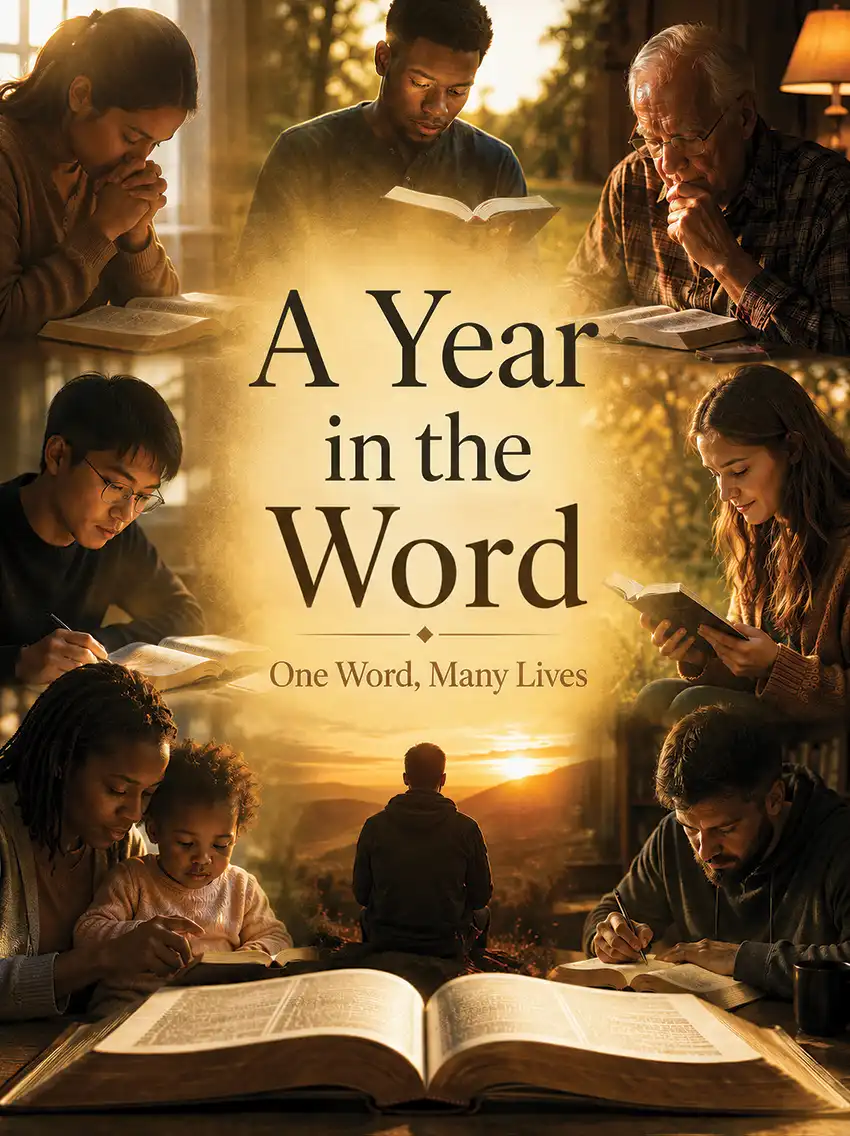
When we put together the idea of a Special Issue about the daily readings, we decided to reach out to a number of different brothers and sisters, of varying ages and in varying countries, to ask them about their experiences of reading the Bible daily. How did reading the Bible every day help them? What did they notice about themselves? What follows is a number of testimonies about how Scripture changes lives. I love the variety that we see here—and yet the consistency. Individuals and families within our community read the Bible differently, but at the same time, all recognize its immense benefit to our lives and even within our day-to-day interactions. The testimonies have been ordered by stage of life.
Jason Hensley
We know from Scripture (Psalm 119:92, 1 Peter 2:2) the importance of reading the Word of God daily. While there are many ways to read and study God’s Word daily, many people in our community have adopted a particular structure in their homes. This plan is none other than the schedule Bro. Robert Roberts established over 175 years ago. So, why do we still use this planner today? We have found practical use of this planner in a couple of ways. First, it ensures variety and eliminates bias in our reading. Instead of studying or reading only the “exciting” sections of Scripture and avoiding chapters we aren’t as “interested” in, it allows us to move fully through the accounts God has preserved for us (2 Timothy 3:16-17). By reading Scripture in its entirety, we’ve realized that all of the Word can be “exciting,” especially the parts we would have otherwise thought to be dull.
Second, following a Bible reading plan that others uphold in their schedules provides godly and edifying conversation when you have the opportunity to discuss your week with a brother or sister around the refreshment table, in the carpool to youth group, or in line for food. Discussion with others about their daily reading will no doubt lead to hearing other people’s viewpoints and takeaways you might not have otherwise considered. This enhancement furthers personal learning of the Scriptures and helps foster the relationships God has blessed us with. After all, the life-changing words God has left in His record are meant to be discussed (Malachi 3:16) and constantly examined.
As to how and when daily reading should occur, it varies from person to person and from house to house. Reading the Scriptures with our household has no doubt been the glue that holds us together at times, but it’s not every day that we are all under the same roof, at the same time, with enough time to read and discuss the portions of God’s word for the day. So, personal reading has become more common in our daily schedules. We have actually seen the value in a mix of communal living room reading and discussion and solitary consideration of the Scriptures. When we are all able to sit down as a family in Christ, the insight, personal connections, and edifying analysis that occur are so valuable. There’s something so unifying about reading the Scriptures as a group. It’s something we thank God for whenever it’s possible. But what about reading alone? Without the motivation and accountability that group reading offers, it’s hard sometimes to start. Leaving our Bibles open on our desks has helped us remember to read and kick-start our day’s reading. Solitary reading, we have found, allows for personal, intimate self-examination and allows us to go at our own pace. When reading alone, we’ve found value in spacing out our daily reading portions. This strategy is helpful in two ways: it keeps the Word of God in our minds throughout the day and makes the readings less overwhelming. There’s been the embodiment of Ecclesiastes 12:12. In allowing the reading, studying, and marking of all three portions to fall on us at one time—something not realistic for everyone and quite an intimidating task. We’ve also found it helpful to read aloud or alongside a recording to assist comprehension. Reading a chapter in its full extent before diving into a word’s meaning, looking up a cross-reference, or going down a thrilling rabbit hole, makes certain that no part of the daily portion is left untouched. Breaking the chapters into sections, using a notebook for interesting findings, and highlighting important verses that resonate with us all help make the daily reading of the Bible engaging and meaningful.
With all of this said, the motivation for following a Bible reading planner needs to be the number one priority. We have found it hard in the past to avoid this daily practice from becoming a ritual that merely appears on our to-do lists. While it’s good that it’s been integrated into our daily schedules, we’ve found we sometimes view it as something to just “get done.” Instead of feeling good about being changed and encouraged by God’s Word, we felt accomplished and puffed up, that “We completed the daily Bible readings for the day!” We’ve had to learn that doing the daily Bible readings, or any Bible reading for that matter, isn’t about retaining academic information, but it’s about committing time each day to allow God’s Word to change and affect us. We shan’t read the Bible just so we can say we have, but read out of thankfulness that God has provided us with the water of life, and be excited that its contents can deeply change us.
Matthew and Ally McCracken,
Milford Road Ecclesia, MI
As long as we can remember, we have been doing the family Bible readings. When approached to discuss the importance of daily Bible reading for children and share our experience, we must first express our firm belief that the instruction of children is one of the most critical aspects of daily Bible reading. Growing families are the target audience. This habit is how we were raised, and over two decades, the formula has largely remained the same. At the heart of our family Bible reading is the belief that when kids are present, they take center stage.
For us, the practice of daily family Bible reading is more of an expectation than any sort of formal institution. Every day when possible, there will be a Bible reading together. At home, away, with company, and even in the car on a road trip, the reading is happening. Doesn’t matter if you’ve already done the readings alone; there’s going to be one together. Growing up, we knew not to go too far after dinner because the Bible readings would start shortly. Our family would choose a book to go through, and we’d read a chapter each night until finished. Afterward, we held a family meeting to decide which book to do next. Everybody read around in a circle—“five verses each!” Dad would say it every time without fail. Illiteracy didn’t matter; if you couldn’t read the words, they would be given to you (as impatient kids and older siblings, we discovered just how long five verses could take from the mouth of a toddler). Afterward came our favorite part: question time. From youngest to oldest (including Mom), Dad would ask a question from the reading. These were divided into two categories: comprehension questions and so-called “thought questions.” Comprehension questions were straightforward and meant to check whether we were paying attention. If you couldn’t answer, you could be saved from the shame of failure by asking for a multiple-choice option. The real meat came in the form of the thought questions; these required us to give our opinion on some portion of the reading and provide some analysis that isn’t directly apparent in the Word. The thought questions were always the “zingers,” as Dad would call them, and they opened the opportunity to discuss difficult and confusing passages with us as kids. Every now and then, we were each given half of the chapter and asked to ask the family questions.
Of course, there had to be some appeal to the competitive and boisterous nature of three young boys. The ability to “steal” a question from someone older than you was introduced, but only after ten seconds. The scrambling to find answers was then accompanied by the loud countdown of your younger sibling. A blitz of “extra credit” questions after everyone had their turn allowed us to show who was quickest. We would act out scenes (if they were fun enough) and occasionally come up with our own zingers to ask Dad, in the hopes of stumping him. In all of this, we learned that the Bible readings are an extension of our family. Every family is different, and each one will have its own way of doing the readings; a family’s values, character, and dynamic can be introduced to the readings while maintaining respect for the word.
As we’ve grown older, our family readings have changed with us: from individual thought questions to open family spiritual discussion, from acting out scenes to preparing for giving a Bible class by reading our chapters together. The basic formula, however, has remained constant: everyone still gets a question, everyone needs to share their thoughts, and there’s still a flavor of competitive silliness that’s inherent to our family. As we fondly recollect, we’ve come up with a few key takeaways that we plan to carry forward in our lives.
Make time to absorb God’s word together every day.
Keep the Bible readings simple and fun. Make them yours!
Give children an outlet to express thoughts and feelings on the Word; this paves the way for personal Bible study.
Family Bible readings will look different for every family. As we reflect, we realize the power and impact of a daily Bible reading on young people’s minds. Our earnest prayer is that the blessing of God’s word may continue to be appreciated by many generations to come until our Lord’s return.
Caleb and Zach Styles,
Ann Arbor Ecclesia, MI
Doing the daily readings has been an important part of our lives. The daily reading of the Word of God has helped us to stay focused, keep our vision clear, and strengthen our spiritual endurance. Hearing the Word of God each day is an incredible privilege, one that I know I can easily take for granted. While we have not read the Word every single day, it is something we deeply need and continually strive toward. I’ve come to realize that if I want to speak to God, it is even more important that I first learn to listen to His voice.
Throughout the year, we have had many of those “Wow, this is so relatable” or “Wow, we really needed to hear this” moments from God’s Word.
One of the keys to consistency in our reading has been flexibility. Many of our evenings are filled with activities, preparation for the next morning, or, more recently, trying to put a baby to bed. So, we’ve had to adjust our schedule at times to ensure that time in the Word still happens. There are also times when evening readings can feel rushed or forced if we are feeling especially tired after a long day. An easy activity on these nights when we might not always have the brainpower for long, meaningful discussion, is to share our favorite verse or try to find a shadow of Christ in the chapter. Often, reading in the morning has been beneficial, helping my mind prepare for another day. Another way we try to get Scripture in is through a Bible verse app on our phones. It shares a Bible verse a day, and since the two of us know we are seeing the same one, oftentimes we text each other if that verse connects with us in a certain way. Being able to adapt has helped us remain steady, even during especially busy seasons.
The daily reading planner has also been a tremendous help. Knowing that others have recently read the same portion of Scripture allows us to naturally step into meaningful discussions, share what we have learned, and ask questions that arise. It has also helped us see more clearly how beautifully connected the Word of God is, as He has woven His message of hope throughout Scripture with consistency and beauty. Whether hosting others in our home or visiting theirs, it is encouraging to know where everyone is in their readings. That shared foundation strengthens both fellowship and spiritual conversation.
This past year has been especially busy; life truly never seems to slow down. There were days when we missed a reading or only completed part of the assigned portions, and as a result, we sometimes fell behind or missed part of the broader story. This year, we’ve decided to try reading the Bible chronologically to maintain a more continuous flow through Scripture. If we miss a day, we just start where we left off and carry on with the story. While this is something we’ve always wanted to try, we deeply value the structure, unity, and shared experience that the daily reading planner provides.
Josh and Taleigh McStravick,
Victoria Ecclesia, BC
We love the daily Bible readings in our family. Some of our best quality times are the mornings, when we linger around the breakfast table over the first reading with our maps, books, and Bible discussion cards; or in the evening, snuggling up on the couches with our Bibles open. We love hearing the connections our kids are making, the cry of “I think we’ve read this story before!” or the excitement of finding a connection to “Revolutions” (Revelations, of course). Bookending the day with the Bible readings sets the tone of our day and shows ourselves and our children the habit of doing important things first.
As a family homeschooling young children, there are so many benefits to reading the Bible. Our children are exposed to the grammatically correct, rich, and nuanced language of Scripture. This environment allows their brains to develop a map of the English language that is more complete and complex than hearing mommy say “Put on your shoes!” for the thousandth time.
The breadth and depth of Scripture give amazing fodder for conversations, both for ourselves and for our children. We are inspired by the mighty heroes of old, disgusted by sin and the selfishness of human nature, and humbled by the majesty of the Almighty. When we talk about character, it reminds us again and again of the importance of morality and integrity, and that our responses to external circumstances determine our outcomes. This repetition and discussion physically changes our brains, reinforcing to our neural circuitry that the Word of God is important. It physically allows us to be “transformed by the renewing of our minds” as is commanded in Romans 12. We would like to find another time to do the second portion consistently, but right now, at our stage, we alternate years with the Old Testament readings, doing the third portion at night. We prefer to do two readings well rather than rush through three!
In teaching our children to learn to read, the Bible readings have been invaluable. We’ve begun, when our children are about age two, to have them repeat a verse, one word at a time, as we read together as a family. This process progresses to repeating a phrase or a few phrases, then deciphering a verse or five as they grow. It’s a daily habit that helps them consistently see their reading progress.
A benefit we didn’t expect was the positive example of reading a daily passage when we meet with other families. There is nothing inspired or miraculous about Roberts’s plan for daily readings, and yet when both families consistently do the same daily readings, reading together becomes rich because both families have recent experience with the passage to discuss. The older children also provide a powerful example for the younger ones, showing them what they can do and normalizing this time together in a world where consumption of digital media and the lack of deep relationships are becoming increasingly common.
However, all of these practical and social benefits are minute when we consider that Scripture reading can make us “wise unto salvation” as 2 Timothy 3:15 says. Consistent and engaged reading of the Bible allows us to enter into the mind of the Father, and to leave changed from our time with Him. And if we can learn that and teach it to our children, that indeed is a treasure without price.
Jesse and Colleen Brown,
Christadelphian Bible Hall, NZ
At the beginning of 2025, I committed to following the Robert Roberts Bible reading plan, and staying with it throughout the year proved incredibly rewarding. Finishing the readings gave me a real sense of accomplishment, but even more than that, it helped me become even more familiar with our wonderful God and His plan for us. Starting each day grounded in Scripture helped me refocus on what truly matters in life. Time and again, the readings spoke directly to the situations I was facing, offering practical guidance and perspective right when I needed it most.
One of the biggest lessons I learned was how important flexibility can be. I didn’t always sit down with a physical Bible every day, but I made it a priority to engage with God’s Word daily in whatever way was possible. Some days that meant listening to the readings in the car, other days it meant doing the readings with my family after dinner or listening while going for a walk at lunch. Approaching it this way removed a lot of pressure and helped me stay consistent. The goal became simple: make sure the Bible had a place every day.
That said, I also learned a lot about how I personally engage best with the Bible. Listening is extremely convenient, but I noticed that I don’t always retain what I hear as well as when I read. When I’m listening, it’s harder for me to pause, re-read a verse, notice repeated phrases or words, read my marginal notes, or sit quietly with a thought that stands out. I’ve realized that I benefit most from slowing down, sitting with the Bible in front of me, and giving it my full attention without distractions.
Looking ahead to 2026, I plan to recommit to the Robert Roberts plan, with a renewed focus on creating more intentional, sit-down reading time. Audio readings will still be a helpful tool, especially when life gets busy, but I want to be more deliberate about balancing convenience with focused reading and reflection. Building on what I learned in 2025, my goal is not just consistency, but deeper engagement with God’s Word.
James Styles,
Thousand Oaks Ecclesia, CA
Securing a daily time to read a few chapters from our Bible is a necessary lifeline for those who want to invest in its “exceeding great and precious promises.” There is no other utterance of mankind that can match such benefits with similar solid reliability.
Happy feelings of calm and satisfaction await the person who discovers the wisdom and gains understanding, revealed in reading the Bible. Talk to those who make daily Bible reading a regular part of their life, for “the merchandise of it is better than the merchandise of silver and the gain thereof than fine gold.”
Daily Bible reading by its students will provide them with a regular reminder and confirmation of what they already know from prior reading. Since all Bible students expect to appear at “the Judgment Seat of Christ,” daily Bible reading prepares them to know God and develop a relationship with Him. Thus, the person who regularly reads from the Bible and accepts its instruction is being uniquely guided in their desire to find “glory and honor and immortality,” leading to “eternal life.”
Occasionally, students of the Bible are tried to test the quality of their mettle. These trials may occur at unexpected times and in unexpected situations, and they therefore have to rely on what they have already learned. In my judgment, those who participate in a daily reading from the Bible will be much better prepared to recognize the “way of escape” that God provides when temptation occurs.
The Bible teaches us there is a blessing associated with forgiveness: “Blessed is he whose transgression is forgiven.” A household that regularly reads the Bible together and comes to know that blessedness is more likely to be a healthy home, where the synchronization of knowledge and practice can be observed.
Old Bible students know what it means when God’s Book speaks about the “outward man” perishing, but the “inward man” being renewed each day. However, to be renewed each day, it must be known and understood. As memory begins to fail, the inward man needs more than ever, dedicated time and a determined effort, to gain the refreshment of daily Bible reading.
Jesus stated that those who loved him would “keep his commandments.” In the world we live in, if we are not careful, precious time is wasted on frivolous activities, and maintaining watch over his commands is compromised. Our minds are easily won over to looking for more of the same; in fact, it leaves us amazed at how easily we can be enslaved again by the “will of the flesh.” When attempting to maintain awareness and diligence in our “Garden of Gethsemane,” we need to continually eat the “manna” of God’s provision. Those who maintain that discipline throughout their life are far more likely to be those who are reciprocally “loved” by the Father and His Son, both now and at his Coming.
Frank and Dorothy Abel,
Book Road Ecclesia, ON