Reading as a Relationship
Jemima Snelling considers meeting God in His Word as a living relationship, where regular reading becomes conversation, trust, and attentive devotion.
 Read Time: 9 minutes
The “bliss point” is a phrase created by food scientist Howard Moskowitz in the post-industrial food industry. It refers to the perfect balance of sugar, salt, and fat in heavily processed foods that makes them irresistible and leaves our appetite insatiable.
The bliss point is designed to use this triad of taste to tap into the brain’s reward system, releasing chemicals like dopamine with every mouthful. This pattern of consumption followed by reward leads to a cycle of craving, driving repeated behavior. Accompanying this bliss point phenomenon is the concept of mouthfeel, or hyper-palatability—how food feels when we eat it. There is a sensory pleasure that helps create and foster an emotional attachment to food. Add appealing packaging and marketing, and these products begin to interact with our sense of identity, or at the very least, our brand loyalty!
By design, these ultra-processed foods often lack the essential nutrients our bodies need. This deficiency can affect our sense of satiety and disrupt metabolic processes and appetite regulation. Consequently, we consume more in an attempt to compensate for what is missing.
Do some of these concepts sound familiar? Perhaps not in what we consume physically through our mouths, but in what we consume mentally through our eyes and ears?
Why do we feel so excited for the next episode of a TV show, the next chapter of a novel, a new magazine issue, or time spent scrolling on social media, yet struggle to muster the same enthusiasm for reading the Word of God?
Have you ever thought, “Wouldn’t it be amazing if I felt this much anticipation for the next Bible reading?” Or what if you could imagine yourself in a Bible narrative the same way you do in a movie?
Sometimes a show or book feels insatiable. We cannot put it down. We feel drawn back again and again. Is it because it lacks the true “nutrients” our minds need, so we keep consuming, trying to fill what remains empty? Sometimes we consume more than we realize. Sometimes more than we should. Perhaps our cognitive processes have been shaped and dysregulated by man’s design.
Screens are easy. They are accessible, convenient, and cleverly designed to keep us watching. However, at the core of it all—noise and distraction aside—it comes down to three things, much like the sugar, fat, and salt combination of junk food. Scripture identifies them clearly in 1 John 2:16: “the lust of the flesh, the lust of the eyes, and the pride of life.”1
No wonder it is hard!
Lust is wanting something you do not have; it can never truly be satisfied. It does not disappear when you obtain your desire; instead, it simply finds something new to pursue. This scenario is a Genesis 3 problem on our living room wall, on the study desk, on the kitchen counter, and in our pocket. It’s as though we carry the tree from Genesis 3 with us wherever we go.
This situation is no small matter.
Novels, films, and shows are one thing—and we must approach them carefully. We have to guard our hearts and use our time wisely (Proverbs 4:23; Ephesians 5:16). But social media is something else entirely. With entertainment, we are largely passive consumers. With social media, the goal is engagement. Brands, organizations, and individuals are actively seeking to establish relationships with us.
Terms that would have sounded strange just a decade ago are now part of everyday language: likes, follows, followers, influencers, shares, engagement, reach, impressions, and community. These are relational words.
Before social media, the primary context in which we heard about being a “follower” was in Scripture, when Jesus called his disciples to follow him (Matthew 4:19) or when Paul urged others to follow him as he followed Christ (1 Corinthians 11:1).
So why does everyone online want a relationship with you? Because we pay attention to those with whom we have relationships. They matter more. And we live in an attention economy!
Attention is the new currency, and this economy is worth trillions of dollars. Every second you spend online is a transaction: your attention is exchanged for content, which is then converted into revenue. Relationships are cultivated not for your benefit, but to sustain this exchange. Human attention is a commodity, and it’s scarce.
We begin to see the pattern: relationships built for profit, and content designed to appeal to our base desires, drawing us into a nutrient-deficient cycle. Does this actually affect us in our day-to-day?
Professor David Levy from the University of Washington has written extensively about social media and its effects on the brain. He coined the term “popcorn brain” to describe users existing in a near-constant fight-or-flight state. In this condition, critical thinking is diminished, self-esteem is lowered, cognition and focus decline, and emotional regulation becomes more difficult. Constant comparison fuels anxiety and depression, and heavy social media use has even been linked to reduced grey matter in the brain. Let that sink in: your brain can physically shrink, reducing your capacity for sustained, deep thought.
It’s a sobering reality.
Still, it is not the end of the story. There is also profound hope. We have the ability to reshape our brains and, as a result, our actions and our lives. The apostle Paul exhorts believers in Romans, “Be not conformed to this world: but be ye transformed by the renewing of your mind.” (12:2). This renewal comes through engaging with the Bible and cultivating a living relationship with God. We speak to God through prayer, and He speaks to us through His Word.
We are the custodians of our time, attention, and relationships. God has given His own Son to make this relationship possible. It is our choice whether we respond. He has provided everything we need: His Word to guide us and prayer to connect us to Him. And this relationship carries a remarkable promise: a peace that surpasses all understanding (Philippians 4:4).
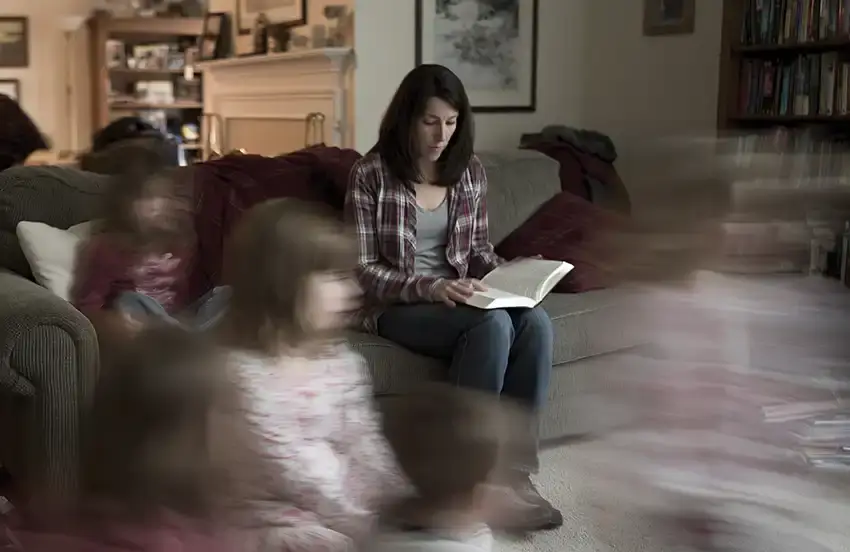
A Different Kind of Relationship
Reading the Bible will always be a choice. When we understand why we make that choice, it becomes deeply encouraging and uplifting. We are naturally more interested in a letter from someone we know; it is personal. It matters. It affects us.
When we read the Bible from this perspective, everything changes.
God, our Father, the Creator and Sustainer of all life, has given us a book containing everything we need to know to have a real relationship with Him. This relationship is not transactional. It is not driven by profit, manipulation, or addiction. It is grounded in love, truth, and sacrifice.
From a risk-management perspective, it is the safest relationship you could ever invest in. Its return is guaranteed. It endures from age to age. It cannot lie. It carries the longest and most proven record of reliability and trustworthiness. It does not fluctuate, and it will never expire. God is all-in. He has already given His beloved Son to make this relationship possible (John 3:16).
The only variable is you. No other relationship offers this level of certainty, stability, and enduring value (apart from our relationship with God’s Son, “the Word made flesh.”)
James helps us understand this, describing God as One in whom there is “no shadow of turning.” It’s interesting to consider the fact that the sun does not actually disappear when night falls. We have simply turned away from its light. Likewise, the sun does not “go behind clouds.” The clouds obscure it from our view. The sun remains constant. Our phraseology around this can inadvertently lead us to believe something is happening to us, rather than taking responsibility for it ourselves. In the same way, God remains constant. If we feel distant from Him, it is not because He has moved. We must simply turn back toward His light, His word. (Psalm 119:105).
How Words Become Relationships
How can black words on a white page become a life-changing relationship?
The Bible is “God-breathed” (2 Timothy 3:16-17). Answering life’s deepest questions, it provides wisdom for both life’s greatest decisions and its smallest daily moments. It is truth; it is not relative; it is not bound by time; it is consistent; it is complete; it begins with where we came from; it answers where we go. But it’s a whole lot more than a reference book. It is God’s self-disclosure—His revelation of who He is and what He is doing. It’s the story of His purpose for the earth, His creative power, His faithfulness to promises and righteousness, His mercy through redemption, and the gift of life through the giving of His Son.
We do not read the Bible merely to know about God, but to know God. We read not simply to be informed, but to be transformed. This transformation is the spirit of God working in us. This result is the black words coming off the white page and into our everyday life. It’s the power of the gospel.
God’s Word is the living seed (Luke 8:11), more precious than gold (Psalm 19:10), a lamp to our feet (Psalm 119:105), and powerful enough to discern the thoughts and intentions of the heart (Hebrews 4:12). This book is in a league of its own, incomparable with all other literature and media.
We should open it with awe and anticipation as Israel was at the foot of Mt Sinai. (Exodus 19). We should open it with open eyes, ready to behold the wondrous things of God’s Law (Psalm 119:18), and we should open it humbled and attentive with the words of Samuel on our lips: “Speak LORD for your servant is listening.” (1 Samuel 3:9).
When we read this way, everything changes. It stops being a task to complete and becomes something we genuinely look forward to. We also begin to notice God everywhere in Scripture and in our lives. Our appreciation deepens the more we learn, the more we realize there is much more to learn. It’s a bit like that phenomenon when you purchase a certain car or notice a particular flowering tree, then suddenly, that car or that tree starts appearing everywhere!
God cares deeply about our everyday lives and our eternity. Scripture shows His concern in circumstances both ordinary and profound: sibling rivalry (Genesis 25-33), feeling unloved (Genesis 29-30), physical illness and suffering (2 Kings 5), and pain or disability (2 Corinthians 12:7-9). He is present in workplace injustice and uncertainty (Genesis 37-50), in anxiety, burnout, and exhaustion (1 Kings 19), and in financial distress (2 Kings 4:1-7), when we are being excluded or overlooked (Genesis 16), and even about everyday lost items (2 Kings 6:1-7). He provides for hunger and practical needs (Exodus 16), recognizes loneliness and the need for companionship (Genesis 2), and sees the anguish of infertility (Genesis 11-21, Genesis 25:21, Genesis 29-30, 1 Samuel 1, 2 Kings 4, Luke 1). He even gave instructions acknowledging recovery after childbirth (Leviticus 12:1-8). It is all beautifully summarized in Matthew 10:30: “Even the very hairs of your head are all numbered.”
Psalm 1 describes the remarkable outworking of regular Bible reading in our lives. We begin to do good for others, developing beautiful qualities—patience, peace, joy, gentleness, endurance, and faith. What we do begins to prosper. Even our physical brain is affected. Through neuroplasticity, the brain can be rewired, enabling us to respond differently than we naturally would. This change is the Spirit of God at work within us. It is what it means to grow closer to God, to have our inner life shaped by His thoughts, and to become more like Him gradually.
Brother Islip Collier writes in his book Principles and Proverbs, “The mind is insensibly affected by the stream of thought passing through it… thoughts repeated become habits of mind, and habits of mind form character.”2
Our character is shaped through the relationship we develop with God as we read His Word.
Transformation, Not Emptiness
Unlike the vacuous cycles we looked at earlier, Scripture nourishes and sustains. Renewing our minds, it brings peace instead of restlessness, clarity instead of confusion, and stability instead of fragmentation.
We are the custodians of our time, attention, and our relationships. God has made the relationship with Him possible. He has paid the great price (1 Corinthians 6:20). He has provided the means.
The choice to respond is ours.
The Bible will not demand your attention. It will not flash, buzz, or compete for urgency. It waits patiently. Nevertheless, if you make it your priority, it will change your life. Habits practiced repeatedly become identity. The investment is worth your time, for now, and forever.
Read slowly, allow it to sink in, and confront your sins (Psalm 139:23). Watch your faith grow stronger (Romans 10:17). Experience calm and inner peace. Read with a pen in your hand. Ask questions. Memorize. Reflect. Read daily, not from guilt, but from need, because our souls, like our bodies, require daily bread. This process is how we meet God in His word.
Jemima Snelling,
Mt. Barker Ecclesia, SA
- All quotations, unless otherwise noted, are from the NIV.
- Islip Collyer, Principles and Proverbs (Birmingham, UK: CMPA, 1959), 135.