When God Feels Distant
Stephen Ball writes for seasons when God seems far away, offering biblical encouragement to keep seeking, praying, and trusting.
 Read Time: 9 minutes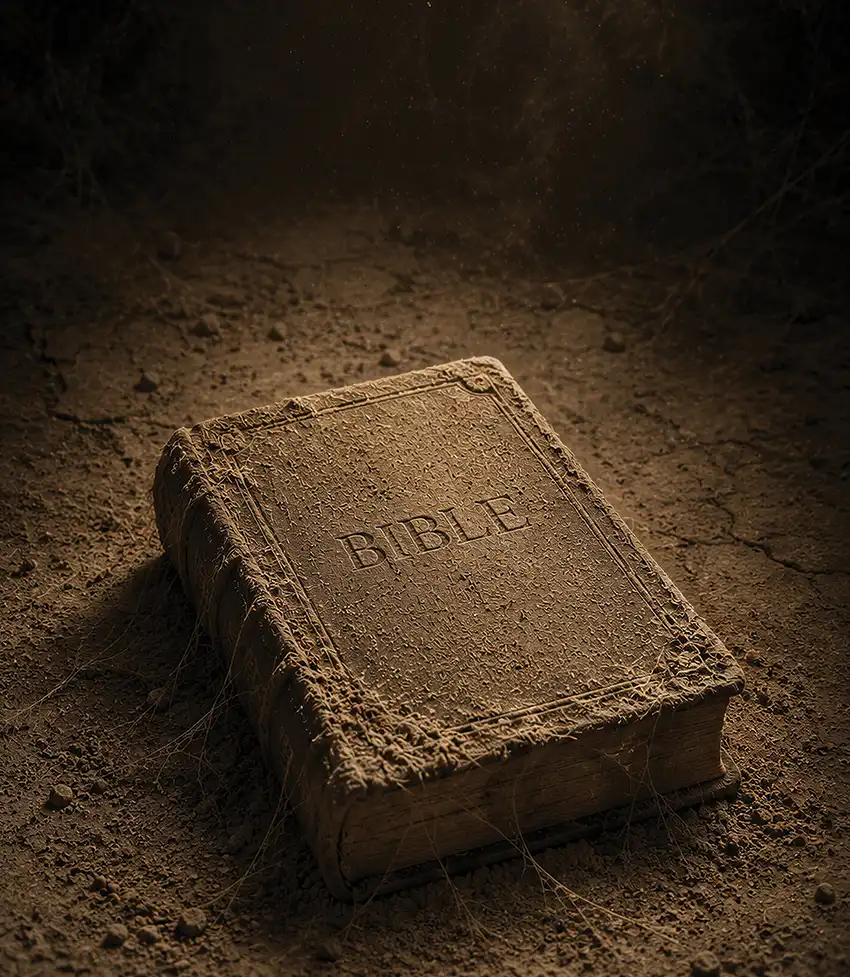
There are times in life when God seems distant. There are times we get lost in a world that demands so much of our time that we forget what our goal truly is. We spend our days chasing our careers, our ambitions, our hobbies, our responsibilities. We scroll. We work. We build. We plan. We worry.
Our Bibles may become dusty books on a shelf, opened more out of obligation than out of hunger. We attend memorial meeting faithfully each week, but even that can become routine, something we do because it is what we have always done. Reading becomes a checklist item. A duty. Something we mean to get to, but often postpone. And yet, we are living in the last days. Do we realize it? The signs are not subtle. The world is restless. Morality shifts like sand. Truth is treated as negotiable. The return of Christ is not a fading hope on the horizon, but a promised dawn already breaking. So we must ask ourselves honestly: what are we living for? Are we making ourselves ready? Are we prepared?
More than a Book
The Bible is the only Truth we have. Not one opinion among many, but the revealed mind of God. It is a letter from our Heavenly Father written directly for us, His children. A letter of invitation into His family. A record of our brothers and sisters from ages past who now sleep in the dust, awaiting the resurrection at Christ’s return. It contains joy and heartbreak. Faith and failure. Justice and mercy. Betrayal and redemption. The rise and fall of kings. The tears of prophets. The steadfast obedience of those who believed God’s promises when nothing around them made sense.
This book tells us who we are. It tells us where the future is going. It reveals lessons from the past. It tells us what God requires. It provides us comfort through trial, direction when lost, and hope through uncertainty. It is the voice of a Father who loves His children with such a love that He gave us His only begotten Son, who lived a sinless life for us, died for our sins upon the cross, and was raised again on the third day.
When the Faithful Felt Faint
And yet, despite the beauty of God’s word, there are seasons when opening it feels flat. Not false. Not doubted. Just difficult. One of the first mistakes we make is assuming that dryness equals spiritual failure. This shame can make it even harder to open God’s word, as we feel it has been too long, and we don’t know where to start. But Scripture itself records men and women of deep faith walking through spiritual deserts.
The sons of Korah cried, “Why are you cast down, O my soul, and why are you in turmoil within me?” (Psalm 42:5 ESV).1 David pleaded, “How long, O LORD? Will you forget me forever?” (Psalm 13:1). Elijah, after his great victory on Mount Carmel, sat beneath a broom tree and asked that he might die, saying, “It is enough; now, O LORD, take away my life.” (1 Kings 19:4).
Jeremiah lamented the loneliness and reproach that accompanied his calling, confessing, “Why is my pain unceasing, my wound incurable?” (Jeremiah 15:18). Job, described as “blameless and upright” (Job 1:1), cursed the day of his birth in the anguish of suffering (Job 3:1-3). Habakkuk looked at the violence and injustice around him and cried out, “O LORD, how long shall I cry for help, and you will not hear?” (Habakkuk 1:2).
Even the disciples, who walked with Christ himself, fled in fear at his arrest (Mark 14:50). Later, they struggled to believe the reports of his resurrection (Luke 24:11).
We must also not overlook our Lord. In Gethsemane, he confessed, “My soul is very sorrowful, even to death.” (Matthew 26:38). On the cross, he cried out the words of Psalm 22, “My God, my God, why have you forsaken me?” (Matthew 27:46). These were not words of unbelief. These were the words of a son in profound anguish and loneliness, spoken in faith, fulfilling the Scriptures.
If the faithful psalmists wrestled, if the prophets lamented, if the disciples faltered, and if even the Son of God entered into sorrow and felt the weight of abandonment, then we should not be surprised that seasons of heaviness visit us as well. These were not faithless people. They were covenant servants. They believed the promises. Yet there were moments when clarity dimmed, strength faltered, and the soul felt weary. Dryness, sorrow, and struggle are not foreign to the followers of Christ.
Structure is a Servant, not a Master
For many of us, Bible reading has been shaped by a beautiful and longstanding pattern. Within Christadelphia, we have the Daily Bible Readings, a system arranged by Robert Roberts that guides us through two Old Testament readings and one New Testament reading each day. It is a thoughtful structure. It ensures breadth, and it keeps us connected to the whole counsel of God. For generations, this system has helped anchor faith for many believers throughout the world. But this structure is not the only way to obtain the fruit of God’s word.
The purpose of the readings is not to complete a system; it is to hear the voice of God. If, in a particular season, three chapters feel overwhelming, it is not disloyal to slow down. If your heart is stirred by lingering in the Psalms, or walking slowly through a Gospel, or studying a single epistle deeply, you are not abandoning the Truth. You are seeking it.
There are many faithful ways to read Scripture. Some thrive on structure. Others flourish in focused study. Some read broadly while others meditate narrowly. The goal is not to keep pace with everyone else; it is to be shaped by the Word. Do what leads you to attentiveness without comparing yourself to other brothers and sisters. Do what awakens thought, reflection, and prayer. The aim is not to perform the readings as a ritual, but to engage them. In seasons when routine begins to feel mechanical, adjusting your study method may be just what restores hunger.
The Noise of the World
Another reason the readings feel dry is that the world around us has grown louder. We are bombarded with information, entertainment, news, images, notifications, and deadlines. Our brains are trained for constant stimulation, but Scripture requires stillness. The Word does not shout; it invites meditation.
When our attention span has been shaped by endless input, quiet reading can feel slow. Hard. Even uncomfortable. Yet Psalm 1 describes the righteous person as one who meditates on the law of the Lord day and night. (Psalm 1:2). Meditation is not skimming. It is lingering. It is allowing truth to settle rather than rushing past it.
God Himself says, “Be still, and know that I am God.” (Psalm 46:10). Stillness is not optional background noise to faith; it is the environment in which knowing God deepens. Elijah did not find the Lord in the wind, the earthquake, or the fire—but in a “still small voice.” (1 Kings 19:12 KJV). The voice of God is not amplified by chaos. It is heard in quiet attentiveness.
Even Jesus modeled this pattern. We are told that he “withdrew himself into the wilderness, and prayed.” (Luke 5:16 KJV). If the Son of God deliberately stepped away from noise to commune with his Father, how much more do we need intentional withdrawal?
Both Scripture and credible medical research affirm the value of stillness. Institutions such as Harvard Medical School and the Mayo Clinic note that intentional quiet reflection can improve attention, reduce stress, and strengthen emotional regulation. In other words, stillness retrains the mind to focus. It helps undo some of the noise constant stimulation creates. If the readings feel dry, sometimes the issue is not a lack of truth, but a lack of silence. Developing habits of quiet meditation can help restore attentiveness:
- Start small and consistently. Even a few minutes of intentional quiet before reading can prepare the mind. “It is good that one should wait quietly for the salvation of the LORD.” (Lamentations 3:26).
- Reduce external distractions. Turn off notifications. Put your phone in another room. Choose a time when your mind is most alert. “Keep your heart with all diligence.” (Proverbs 4:23).
- Begin with a simple, honest prayer. “Father, quiet my mind. Help me hear You.” Like Samuel, we can say, “Speak, LORD, for your servant hears.” (1 Samuel 3:9).
- Slow your pace. Read a single verse more than once. Pause between phrases. “Let the Word dwell in you richly.” (Colossians 3:16).
- Create a designated space. Treat the moment as a conversation with your Father, not an item to complete. Enter into your room, and shut the door (Matthew 6:6).
God is Near to the Brokenhearted
Sometimes the dryness may also stem from something deeply personal. Perhaps you prayed for something with your whole heart, and yet God remained silent. Perhaps a relationship fractured in a way you never expected. Perhaps a betrayal left wounds that still ache when you think about them. Perhaps ecclesial conflict damaged your trust, and loneliness has settled in quietly, refusing to leave. It is possible to believe every true doctrine and still feel fragile inside. You still attend. You still read. You still bow your head in prayer. But something in you hesitates. Something feels guarded. When the heart is protecting itself, Scripture can begin to feel distant. But God is not distant. “The LORD is near to the brokenhearted and saves the crushed in spirit.” (Psalm 34:18). He is near, not standing back. Near the very moment you feel most undone.
Joseph wept in a foreign land, yet “the LORD was with Joseph.” (Genesis 39:2). David knew betrayal and confessed, “When my father and my mother forsake me, then the LORD will take me up.” (Psalm 27:10 KJV). Paul stood nearly alone and still declared, “The Lord stood with me and strengthened me.” (2 Timothy 4:17 KJV). God’s presence is not measured by how strongly we feel it. He has promised, “I will never leave you nor forsake you.” (Hebrews 13:5 NRSV). If your readings feel dry because your heart is heavy, do not withdraw further, but do not force yourself into performance either. Instead:
- Bring your pain into prayer before you open the page. Be honest with yourself, and with God. The Psalms teach us that honesty is welcome. Psalm 77 reads like a cry for help from a brother who thought he was doing everything right but could not feel God’s presence. It is not until verse 10 that the psalmist states: “This is my infirmity: but I will remember the years of the right hand of the most High.” (KJV). Our years are in the right hand of God. Through sorrow and pain, through joy and success, through love and heartbreak, our God is always with us.
- Choose passages that give language to sorrow. Read Psalm 13. Psalm 42. Psalm 77. Let inspired lament carry what you struggle to articulate. There is “nothing new under the sun.” (Ecclesiastes 1:9). The trials we go through today are much the same as those our brothers and sisters of ages past have had to deal with.
- Read smaller portions, more slowly. When the heart is hurting, long readings can overwhelm you. A single paragraph held with mediation in the heart may be just enough.
- Consider speaking with a trusted brother or sister. Isolation deepens heaviness. “Bear one another’s burdens.” (Galatians 6:2).
Above all, remember this: you are not approaching a reluctant God. You are approaching a Father. Wrestling is not unbelief. Sometimes, it is the most honest form of faith.
In the Valleys We Grow
Spiritual maturity, formed in quiet persistence. Trees do not grow visibly day by day, yet rings form year by year. The seasons that seemed the harshest are often the ones that strengthened the roots. We must remember, it is in the valleys we grow. The years when reading felt routine may later be seen as the years when faith quietly deepened. When emotional intensity fades, commitment is purified. You continue not because it excites you, but because you know in your heart that there is only one thing you truly seek.
Psalm 27:4-5 (KJV) reads:
One thing have I desired of the LORD, that will I seek after; that I may dwell in the house of the LORD all the days of my life, to behold the beauty of the LORD, and to enquire in his temple. For in the time of trouble he shall hide me in his pavilion: in the secret of his tabernacle shall he hide me; he shall set me up upon a rock.
Our Daily Bread
Christ taught us to pray, “Give us this day our daily bread.” (Matthew 6:11 KJV). Not bread for the next ten years. Not strength for a lifetime all at once. Daily bread. The journey of faith has always been day by day.
We are not called to relive yesterday’s failures, nor to anxiously grasp tomorrow’s uncertainties. We are called to walk faithfully today. One reading. One prayer. One step of obedience at a time. “The steadfast love of the LORD never ceases; his mercies never come to an end; they are new every morning.” (Lamentations 3:22-23). New every morning. That means dryness yesterday does not determine faithfulness today.
If your readings feel dry, do not panic. Do not assume you are drifting beyond recovery. Keep showing up. Even briefly. Even imperfectly. Dust off the Book again, not as an obligation, but because you understand what it is: a letter from your Father. A record of your family. A promise of your future.
The Kingdom is at hand. The Day is approaching. Therefore, let us consider one another, “exhorting one another: and so much the more, as ye see the day approaching.” (Hebrews 10:25 KJV). We are not walking this road alone. We are a family. We love one another, as Christ also loved us. We remind one another of the hope set before us. The only true failure is refusing to rise again. So let us walk together, day by day, toward the Kingdom. The dryness in our hearts will soon give way to the living water that Christ alone can give.
“Surely I come quickly.”
“Amen. Even so, come, Lord Jesus.”
Stephen Ball,
San Diego County Ecclesia, CA
-
Unless otherwise noted, all quotations are from the English Standard Version.
God’s presence is not measured by how strongly we feel it. He has promised, “I will never leave you nor forsake you.” I thought this was a very poignant, perceptive and encouraging point in this article. Thank you, Stephen.