Paul’s Last Words to the Ephesians
Paul’s final words weren’t about systems or structure, they were about people: feed, watch, build, give, and above all, hold on to love and joy.
 Read Time: 5 minutes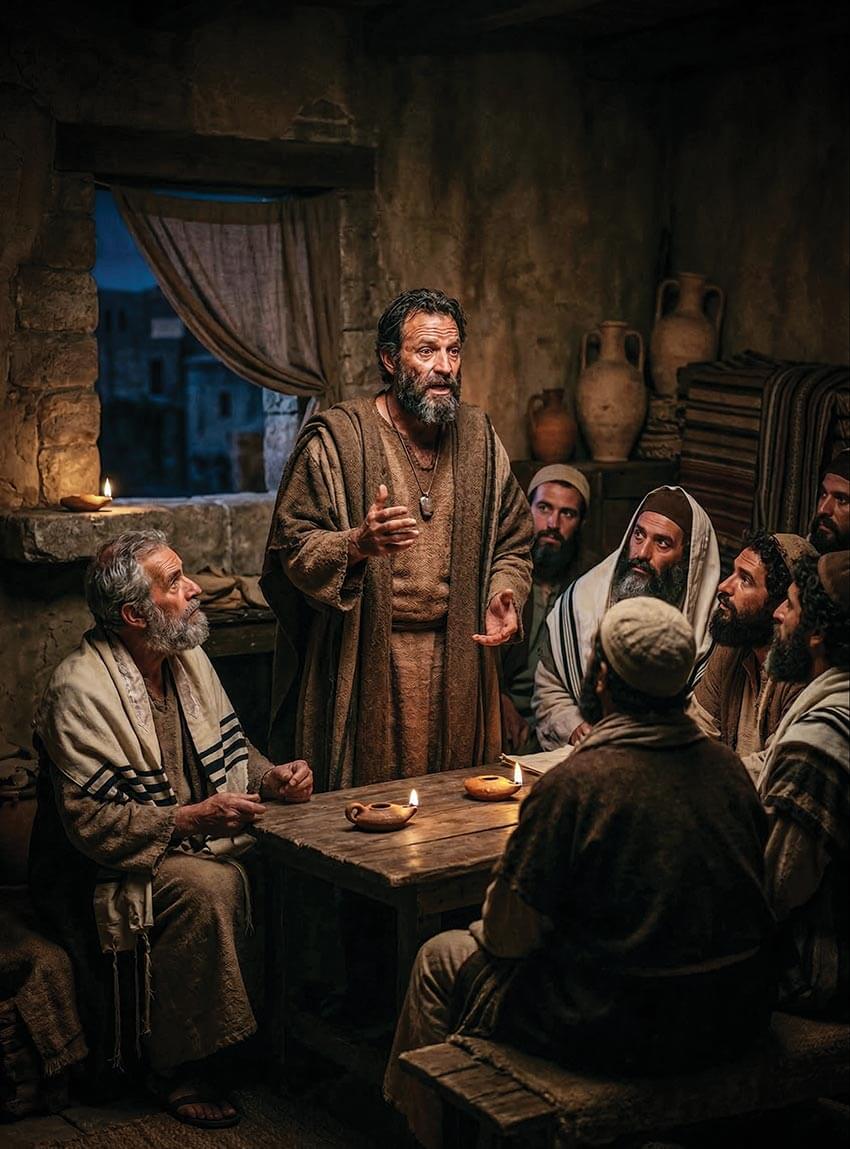
When my mother called to tell me that my grandfather had very little time left, I was eager to see him one last time. I rushed to the airport and made it to his bedside before he slipped away. He was too weak to speak. He lay peacefully, and I can clearly remember that he was wearing a T-shirt with the words “I love the Philippines” printed across the front. For much of his life, his great passion had been preaching and serving the brothers and sisters there. Even though there were no words, he left me with a final message I could take with me about what truly mattered.
In Acts 20, the Apostle Paul gathered the elders of the Ephesian ecclesia to deliver his own final message to them. This ecclesia had been central to Paul’s work among the Gentiles, and they were deeply loved by him. It was a vibrant, passionate, hard-working ecclesia, and Paul had worked alongside some of his closest companions, Aquila and Priscilla, Timothy, Apollos, Luke, and many others. Knowing he would never see many of them again, Paul chose his last words very carefully, passing on to them what mattered most.
Interestingly, Paul had spent close to three and a half years in Ephesus, the longest time he remained in any one place during his missions. Luke records this deliberately. He wants us to see Paul’s time in Ephesus as the continuation of Christ’s ministry, but now among the Gentiles. The parallels are everywhere in Acts 19.
- Paul finds 12 disciples and baptizes them (Acts 19:5-7)—just as Christ began with 12.
- Extraordinary miracles are performed (Acts 19:11)—just as miracles were performed through Christ.
- His popularity spreads so widely that books are publicly burned (Acts 19:19)—just as Christ’s fame spread through Galilee and Judea.
- The religious and political powers of the city become threatened (Acts 19:24-27)—just as the Jewish authorities of Christ’s day.
- It all ends with the crowd in Ephesus crying out in rage and confusion—just as the crowd cried in Jerusalem to crucify Christ.
So, when we move into Acts 20, just as Christ gathered his disciples in an upper room at the close of His ministry, Paul now gathers the Ephesian elders to give them his final words. This is the Gentile Upper Room moment.
Paul begins by declaring that he is innocent of the blood of all men, by which he meant that he had not flinched in declaring and passing on, in word and action, the whole counsel of God. He had lived among them through triumphs and trials, and his race in Ephesus was now complete; it was time to hand over the baton to them. In doing this, he does not pass on a static manual of procedures to follow; instead, he gives them five spiritual charges that he hoped would shape their ecclesial life after he was gone.
First, Paul charges them to feed the ecclesia (Acts 20:28). The word carries the sense of tending and shepherding—not by ownership, but through care. They are reminded that the flock does not belong to them, but to God, and that it has been purchased at immense cost. Paul had personally shown them what this kind of shepherding looked like during his time among them, not only in his teaching, but in his physical dedication and tireless care. It is an example many of us recognize. We can each recall individuals who have gone before us—brothers and sisters whose quiet service, practical help, and spiritual care shaped our own faith within God’s ecclesia. Now, Paul tells the Ephesian elders that responsibility rests with them—and in the same way, it rests with us.
Secondly, Paul calls them to watch (Acts 20:31). The word means to remain awake and vigilant. A shepherd not only feeds the flock but must also be ready to defend it. Paul reminds the elders that this danger would be unavoidable. Some would seek to distort and twist his teaching—pressures would arise from outside the ecclesia, and voices would emerge from within it. This is why Paul had spent years reasoning with and persuading them (Acts 19:8-10), patiently and thoroughly grounding them in the truth. He understood that the purity of the message must be both preserved and passed on. If the message is not consciously guarded, it will inevitably be reshaped by the pressures and influences of the age.
Thirdly, Paul urges them to build (Acts 20:32). The word is used in a continuous sense—to build upon, to keep building. The same word that had been the source of their initial growth (Acts 19:20) would need to remain the foundation of their ongoing development. Paul is clear that spiritual growth does not happen automatically; it requires deliberate continuation. He also repeatedly uses personal language in this section, emphasizing that this work of building cannot be delegated. Each believer must take responsibility for their own spiritual construction. Our faith is not something we inherit fully formed from others; it is something we must continue to build steadily over time.
Fourthly, Paul encourages them to give (Acts 20:35). The word he uses encompasses a wide range of acts of service—practical, physical, and spiritual. During his time with them, Paul had modeled this spirit personally. He gave of his strength, his skills, and his resources for the sake of the ecclesia. He reminds them that such giving is blessed, a word that carries the sense of deep happiness and fulfillment. As Paul spoke these words, it is easy to imagine him recalling some of the happiest moments of his life: laboring late into the night alongside his companions, mending tents to support the work of the gospel, sharing conversation, laughter, and reflection on the events of the day. A life of giving in ecclesial service brings purpose and joy, as brethren and sisters work side by side, each contributing their skills toward a shared hope. Paul urges the Ephesian elders—and us—to embrace this way of life.
Finally, Paul speaks of finishing his course with joy (Acts 20:24). The physical circumstances awaiting him in the months ahead would be far from joyful. Imprisonment, accusation, and suffering lay directly before him. Yet Paul was determined to finish his race with the same deep motivation that had sustained him to this point. This joy was not rooted in circumstance but sprang from a profound appreciation of the grace shown to him, and from a clear vision of the future glory he would share with his brethren. It was this joy that would enable him to endure the trials and troubles that lay ahead.
Decades later, Christ himself reviewed the progress of this ecclesia in his personal letter to them (Revelation 2), and it is striking that his evaluation returns to this final matter in particular. He acknowledges that they had continued to labor diligently in his service, showing perseverance and dedication over time. They had watched carefully and dealt decisively with false teaching that arose in their midst, demonstrating that they had taken Paul’s words seriously and guarded the message entrusted to them. Yet despite all this, they lost what was most important. They had lost love; they had lost joy. So serious was the situation that Christ warns them that unless this is addressed, their lampstand would flicker and eventually fade.
This is incredibly instructive. It shows that it is possible to maintain pure doctrine and active service—both of which matter greatly to Christ and to Paul—and yet still be failing at the very center. When joy and love are lost, everything else is placed at risk.
Our age is no easier than theirs. Life can weigh heavily on our hearts through personal stress, family strain, disappointment, ecclesial tension, anxiety, uncertainty and physical weariness. These pressures can quietly erode the inner delight that once motivated us. Yet Christ reminds us that maintaining joy, and the love that first drew us to him, is essential if we are to finish our race!
This joy is not always expressed outwardly. It is the quiet inward joy that anchored Paul himself—a joy rooted in our identity in Christ and in our hope in the future God has promised. It is renewed whenever we return to our first love, which is why our weekly remembrance is so vital. It is a moment when love and joy can be rekindled, as we are reminded of the one who endured the cross for the joy that was set before Him.
These powerful last words of Paul were not only for the small group of elders who sat with him at Miletus as he prepared for his final journey to Jerusalem. They are for us all. Paul urges us to feed one another, to watch and guard the truth of the message with gentleness and vigilance, to keep building our personal faith through the word, to give of our talents in the service of God’s family, and—most importantly—to maintain the joy and love that motivated us from the very beginning of our faith.
Jona Lawson,
Blackburn Ecclesia, VIC
Thank you Christadelphian Tidings magazine for publishing this well thought out message for all of us.
Thank you Brother Jona for such a wonderful reminder to us. The first thing that caught my attention was the T-shirt your Grand father wore at his falling asleep in the Lord. What a wonderful idea. It showed truly what he was looking forward to. I have also been thinking about the work of the Apostle Paul. May we all try to be more inclusive in showing our love of the members of our own ecclesias. The memorial service is the most important part of our service as well as the fellowship of being together. The comparisons between Paul and Jesus are also important for us to remember and to heed their instruction. I really enjoyed how you reviewed both the teachings of Jesus and Paul, as well as ways we can reflect these teachings in our lives. Praying we all show more love and joy at our memorial services and during our dealings with others.