What Your History Teacher Never Told You
A look at how biblical prophecy and history align to reveal a recurring pattern of hostility toward God’s people across empires and centuries.
 Read Time: 8 minutes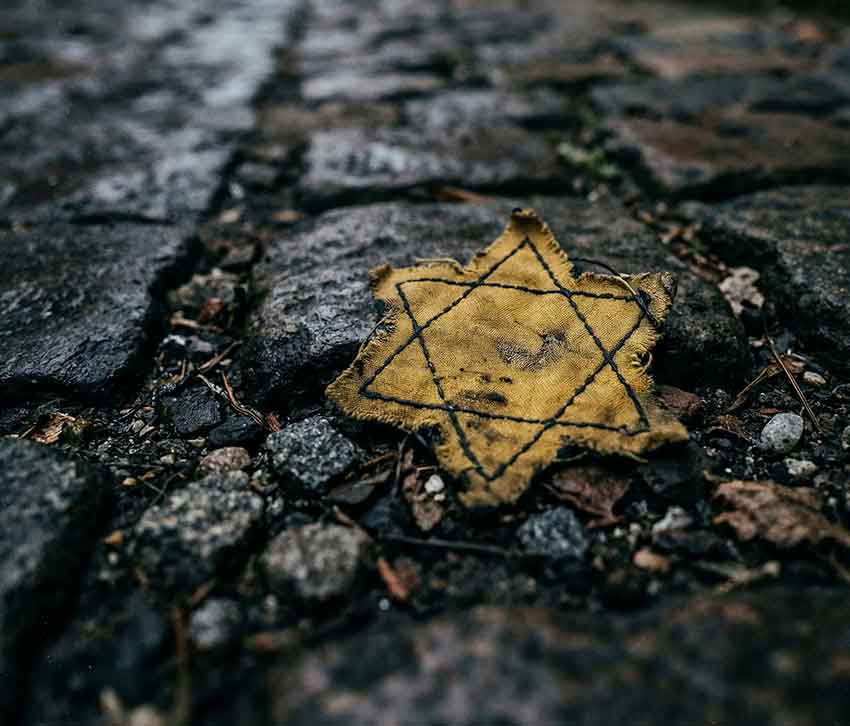
A few months ago, I wrote a couple of articles about Daniel 2, Daniel 7, Revelation 13, and Babylon. In those articles, I showed how, from the five phases of Daniel’s image and the five phases of the various beasts, God revealed a picture of Babylon or Babel. Scripture painted each phase, represented by a different empire, as another manifestation of Babel. From the head to the feet, the image was one of Babylonian sentiments and actions.
When we looked more closely at the Babel story in Scripture, we saw that it is often linked to two main ideas: pride and hatred toward God’s people. This hatred was aimed at both the Jews and those who would later be spiritually joined to them.
However, whenever looking at prophecy, we also need to look at history. History is what allows us to see whether our interpretation is correct, or at least in the right direction. But the problem here is that I took a break from these articles and never actually wrote out the history—so you didn’t get to see for yourself how this understanding of Daniel and Revelation fits continuously throughout history (See what I did there? That’s because this is the continuous historic interpretation).
So in this editorial, we’ll explore that history together.
The First Empires
The Bible makes it clear that Babylon fought against God’s people. Assyria, which ruled the same region as Babylon, conquered and scattered Israel’s northern kingdom, leading to the “lost ten tribes.” Babylon later captured and exiled the southern kingdom of Judah.
But what about Persia? In some ways, Scripture describes Persia favorably. God called Cyrus His “anointed,” or “Messiah” (Isaiah 45:1). Cyrus certainly cared for God’s people when he sent them back to the land. Nevertheless, Persia has a major blotch in its track record—and though Cyrus was a friendly king, he was only one person. Unfortunately, later in Persia’s history, Haman sought to kill all of the Jews, and have you ever noticed what happened with that whole decree? Yes, in a way, Esther and Mordecai overturned it, but not entirely. Take a look:
Now the rest of the Jews who were in the king’s provinces also gathered to defend their lives, and got relief from their enemies and killed 75,000 of those who hated them, but they laid no hands on the plunder. (Esther 9:16).
That’s a big number! And these weren’t just people who didn’t like Jews; these were the people who knowingly decided to go out and kill Jews, even though the Jews were now allowed to defend themselves! In other words, though Persia had one good king (and later a good queen!) who wanted to take care of God’s people, the empire itself boiled over with a violent hatred for Jews.
When it comes to the Greeks, Alexander the Great conquered Judea and treated the Jews fairly well. Like Cyrus, he let them keep their laws and customs. However, he died not long after taking over the area. After his empire split, one ruler, Antiochus Epiphanes, tried to ban Judaism, forbid circumcision, and force the Jews to worship him in the Jerusalem temple. These actions shocked the Jewish people:
He arrogantly entered the sanctuary and took the golden altar, the lampstand for the light, and all its utensils. He took also the table for the bread of the Presence, the cups for drink offerings, the bowls, the golden censers, the curtain, the crowns, and the gold decoration on the front of the temple; he stripped it all off. He took the silver and the gold and the costly vessels; he took also the hidden treasures that he found. Taking them all, he went into his own land. He shed much blood and spoke with great arrogance. Israel mourned deeply in every community. (1 Maccabees 1:20-25 NRSV).
Although that quote comes from the Apocrypha and not from Scripture, it shows us how Jews at the time saw these events. This persecution led to the Hanukkah rebellion, from which the Maccabees emerged.
And finally, Rome fits the category as well. When two of the Maccabees’ descendants couldn’t figure out how to share the rulership of Judea, they asked Rome for help. Rome gladly sorted out the problem—neither of them would rule, and Rome would rule instead. Eventually, General Pompey turned the temple into a bloodbath, and Rome imposed harsh conditions on Judea. When the Roman-Jewish war erupted in AD 66, Rome would soon tear apart the temple, leaving not “one stone upon another” (Matthew 24:2), as Christ had prophesied. A couple of generations later, after the Bar-Kochba rebellion, Rome would completely remove all Jewish presence from Jerusalem and attempt to turn the Temple Mount platform into a temple for Jupiter.
All of these nations have embraced anti-Judaism. Nevertheless, Daniel 2 and 7 don’t present just four empires. They show five phases, and that fifth phase, the feet and the little horn, respectively, are linked to the Roman Empire. As I suggested previously, I think this fifth phase describes the Roman Catholic Church, and history supports this view.
Catholic History
Many people don’t enjoy history. If that’s you, good job for reading this far in this article, and I’ll do my best to make the rest of this worth your while. Unfortunately, much history can really be boring because it’s often taught as memorized dates and facts, and it jumps around. Teachers don’t always make it interesting and engaging. History comprises culture, human nature, psychology, art, music, war, “coincidences,” and repeating themes. Sometimes things that you do need to learn aren’t ever taught. One of those things—perhaps because secular education often tries to shy away from considering the powerful impact religion has had on almost all history—is the history of the Catholic Church and the Jews. I’ve taught this subject at Jewish universities and at Christian universities; fascinatingly, most Jews know this history, but almost no Christians do.
Here’s the situation: the Catholic Church and its Protestant offshoots have historically hated the Jews and tried to kill them, and many individual Catholics and Protestants still do. Let me share a few examples.
John Chrysostom is a Catholic saint and was the fourth-century bishop of Constantinople. He said this about the Jews: “Although such beasts are unfit for work, they are fit for killing. And this is what happened to the Jews: while they were making themselves unfit for work, they grew fit for slaughter. This is why Christ said: ‘But as for these my enemies, who did not want me to be king over them, bring them here and slay them.’”1 This isn’t an abnormal quote. The church fathers are full of such things.
So it’s not surprising that all the crusades included attacks on Jewish communities in Europe. Christians also accused Jews of poisoning wells and causing the Black Death, which led to even more violence against Jews. The blood libel—the false claim that Jews killed Christians for their blood or used it in cruel rituals, became common in the Middle Ages and led to more massacres. The last European trial for blood libel was in Russia in the early 1900s, and now these accusations have spread to the Middle East.
Protestants were involved, too. Martin Luther, for example, was one of the harshest writers against the Jews. He wrote a book called On the Jews and Their Lies, where he used hateful language and even suggested ways Christians could remove Jewish communities from Europe. Hitler seems to have followed this plan during Kristallnacht in 1938.
Ultimately, it shouldn’t be surprising, then, to note that the Holocaust was largely committed by Christians (something that the history books typically leave out). In fact, Hitler often used Christian rhetoric to convince Germans to stand against the Jews with him. This historic anti-Judaism is why so many churches and denominations have, post-Holocaust, apologized for their approach to Judaism.
I know these are strong assertions and may be shocking if you haven’t heard them before. If you’re interested, I’m happy to provide historical documentation for everything I’ve said at (editor@tidings.org), or you could take a look at my book Centuries of Persecution. This bias is why history is important. It shows that our interpretation of prophecy fits both the Bible and real events.
This Month’s Issue
Even more, this history validates our decision to be separate as a community. Yes, we’re Christians, but we’re also Christadelphians. And because our beliefs are different, so are our actions. Thus, while many Christians were killing Jews during the Holocaust, our community tried to rescue them through the Kindertransport, addressed in my book Part of the Family.
And so, in this issue, we have articles that remind us why we choose to be separate. In the Life Application section, Cathy Badger discusses Paul’s leadership in Corinthians and what our community can learn from it. Joanne Gray also tells us her story of being born into the Catholic Church and eventually becoming a Christadelphian. In Exhortation and Consolation, Ron Cowie considers some of the prominent women of the Bible. He reminds us that with God, nothing is impossible. Even though we are a small group, God can work through us and do amazing things. In Back to the Original, Joshua Elrom helps us to understand better how Hebrew works as a language and discusses a unique approach to Hebrew in our community that could use a little improvement.
In First Principles, Emily Hocking talks about life as a Christadelphian after baptism and the need to accept grace. In Stuff that Works, Alan Smith explains the mid-week potluck his ecclesia has implemented. In the Moms’ column, Nancy Brinkerhoff considers the advantages and disadvantages of homeschooling. For Bible Study, we continue Ben Brinkerhoff’s exposition of Romans and explore the New Covenant with Ted Sleeper. The magazine ends with updates on Truth Corps and Christadelphian ecclesias in the Caribbean, an article by George Booker about the Magi, and a couple of letters to the editor. On the back cover, we also introduce a new page for the community: Tidings Music (music.tidings.org).
Altogether, we have an issue that provides material tailored to our community. It’s uniquely Christadelphian—because even though we are Christians, our beliefs have separated us from the majority of Christianity, particularly with the way that many Christians have treated Jews.
And yet, how is it that these Christians could read the same Bible and still decide to hate Jews? That’s what we’ll consider next month.
Jason Hensley
- John Chrysostom, Discourses against Judaizing Christians, trans. Paul Harkins (Washington: Catholic University of America Press, 1979), 8.