Habits of Grace
Belinda Stone explores spiritual habits that quietly train the heart, showing how repeated practices open space for grace to shape ordinary days.
 Read Time: 7 minutes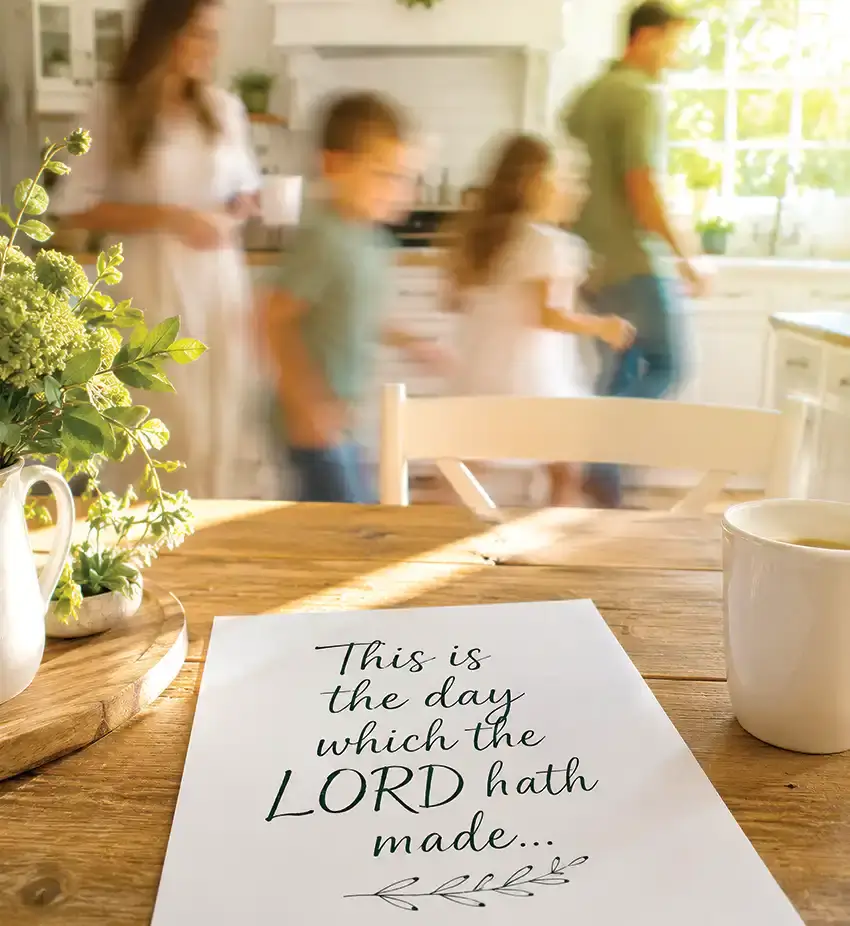
Life, in whatever season we find ourselves, can feel relentlessly full. Days are shaped by constant movement, waking, working, schooling, eating, and resting—often leaving us feeling as though we are simply getting through, rather than living with purpose.
Yet God’s word reminds us that the ordinary rhythms of life matter. What if these everyday moments could become more than survival? What if they could be intentionally shaped to draw our hearts and minds closer to God?
The Power of Habits
Habits are often thought of as mundane or mechanical, yet they are deeply formative. They shape direction, mold character, and quietly influence the course of our lives.
A familiar saying captures this progression well:
Watch your thoughts, they become your words.
Watch your words, they become your actions.
Watch your actions, they become your habits.
Watch your habits, they become your character.
Watch your character, it becomes your destiny.
Scripture consistently emphasizes the importance of the mind—what we dwell on, meditate upon, and allow to take root (Romans 12:2; Philippians 4:8). Intentional thoughts, practiced consistently, form habits. Over time, those habits shape character, guiding us toward the hope set before us: the Kingdom of God.
Daily habits, though small, are foundational to developing a spiritual mind. Whether through prayer at the beginning of the day, giving thanks at meals, or reading God’s word before rest at night, repeated acts of devotion create rhythms that orient our lives toward God.
Start Small, Start Consistent
Habits are not formed overnight. Lasting change begins simply—with small, consistent steps.
Each day contains what might be called “middle moments”: brief, often overlooked spaces such as the morning routine, the drive to work or school, shared meals, or bedtime. These moments provide natural opportunities to pause, reflect, and refocus our hearts on our Heavenly Father and His Son.
Habits to Help Direct Your Mind Spiritually and Emotionally
Here are some simple examples to get you thinking about how you can make those middle minutes count. These practices can begin to form lasting grooves of God’s goodness in your life.
Mornings
The beginning of the day often sets its tone. Without intention, mornings can feel rushed and reactive. Introducing a short prayer or verse can help center our minds before the day unfolds. This routine may be as simple as reciting a familiar verse: “This is the day which the LORD hath made; we will rejoice and be glad in it.” (Psalm 118:24). “The steadfast love of the LORD never ceases, His mercies never come to an end. They are new every morning, great is your faithfulness.” (Lamentations 3:22-23 NRSV).
Actioning this simple habit reminds us to pause and remember that each new day is a gift from God. We need to live it with joy and purpose, reflecting His glory. The day belongs to Him.
Incorporating Ideas for Reading and Prayer
Reading the Bible and praying are among the most powerful daily rhythms we can practice. They do not need to be long or elaborate—the key is consistency. Finding space and time to speak to God and read His Word is crucial. We need to be absorbing God’s Word every day. There are many ways to do this. Here are some ideas:
- Bible apps that dramatize the reading of Scripture aloud—helpful to listen to when in the car, and can help you focus better when reading along with it.
- Using acronyms to help you to gain insight from what you’re reading, e.g., (SKI—(S)ummary (K)ey verse (I)impact.
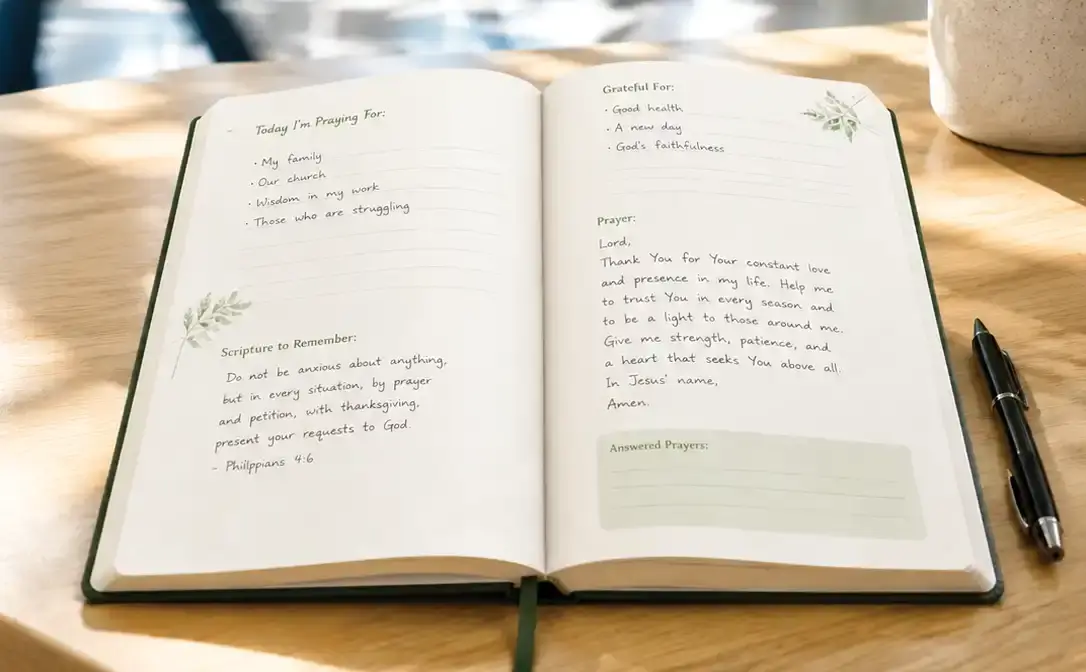
- Prayer journals that help to direct and focus your prayer life.
- Study journals and books that help you to learn more about a specific subject.
- Christadelphian books on different subjects to broaden your knowledge and continue to fill your mind with God’s word.
- The website Magnify Him Together has many helpful tools and resources to help bring God into your life.
- Listening to Christadelphian music during commutes helps passages and concepts stick in your mind.
- Listening to podcasts—Good Christadelphian Talks, Wilderness Conversations, Faith Works and the list could go on and on.
- Phone apps that give you a verse a day. Set the notification for the first thing in the morning so that when you wake up, your first phone alert is a Bible verse. Read this and meditate on this before you begin your day.
- Memory verses—set yourself a new verse to learn every week (or month, or whatever works).
- Place this verse above your light switch, on your bathroom mirror, on your steering wheel, or somewhere you look at every day. Try to commit this to memory. There is a really good app called The Bible Memory App that helps you learn and track verses.
- Another method is to make a memory verse bracelet. Get yourself some cheap letter beads and some string. Decide on your verse of choice and make a bracelet with the first letter of every word of the verse. Example: “This is my beloved Son in whom I am well pleased” (Matthew 3:17) would look like “TIMBSIWIAWP.” When an opportunity arises during the day, look at your bracelet and see if you can recite the verse in your head using the prompt on it.
- Physical Gratitude journals or apps (e.g., Gratitude Jar) will help you focus on and feel God’s goodness in your life, with the opportunity to thank Him for it.
- Listening to Christadelphian audio books.
- There are so many little rituals you can add to your day that can help keep God at the focus. An example could be, every time you turn on a light switch or light a candle, say out loud (or in your head): “Jesus is light.”
These ideas are by no means an exhaustive list, but prompts to help spark ideas for using your middle moments well.
Habit Stacking
There is a concept called habit stacking, which encourages you to build a new habit on top of an existing one, making it easier for the new habit to stick.
Identify something you already do habitually and use this to generate your new habit. Maybe when you do the washing, you say a prayer. Once this becomes a habit, you stack a new one on top of it—laundry, pray, and five things you are grateful for. Start with one and keep stacking.
Extending Our Reach
Spiritual growth is meant to be shared. Learning deepens when it is shared. Hospitality provides a natural avenue for this extension. Shared meals offer a valuable opportunity for connection and reflection. When possible, inviting others to share a meal (or a simple cup of tea) fosters conversation and strengthens relationships.
Simple questions such as “What was a highlight of your day?” or “Where did you see God at work today?” can encourage gratitude and spiritual awareness. Mealtimes can also reflect the warmth of Christ-centered hospitality, an opportunity for generosity, care for others, and a sense of belonging within God’s family. God is not asking us to impress or entertain with fancy food and perfect homes; He wants us to show His love to others by extending our homes to accommodate those who need spiritual encouragement.
There is something sacred about gathering around a table. In the simplicity of shared meals, we can share the love of God with others. The table becomes more than a place to eat—it becomes a place to connect, listen, love, and build faith. Jesus taught around tables, shared meals with the broken and searching, and revealed himself after his resurrection in the setting of a meal. The early ecclesia followed this example, creating a rhythm of life where spiritual and relational nourishment went hand in hand.
In today’s fast-paced, disconnected culture, the table still offers the same invitation. God is not calling us to impress or entertain; He is calling us to love. Hospitality becomes powerful when it uplifts, encourages, and helps others feel a sense of belonging in God’s family.
One simple way to bring the focus on God into our hospitality is to make Bible readings a normal part of our home life. Regardless of who is at your table, opening the Bible together adds depth and spiritual focus, reminding us that it is God who unites us, not just social connection.

Loving Our Ecclesia
Being invested in the spiritual growth of our wider ecclesial family is not just helpful—it is vital. When we support, encourage, and create opportunities to grow together, we strengthen the whole body of Christ.
While every ecclesia differs in size and circumstance, recognizing needs and responding thoughtfully leaves a lasting impact on both giver and receiver.
It Matters
When we realize that ordinary moments can be deeply spiritual, we begin to see the value of using those middle moments to honor and glorify God. There will be seasons where you feel discouraged, and nothing seems to be changing. Do not give up.
God does not ask us to do this alone. He promises: “So do not fear, for I am with you; do not be dismayed, for I am your God. I will strengthen you and help you; I will uphold you with my righteous right hand.” (Isaiah 41:10 NIV).
Transformation rarely happens through big, dramatic moments. More often, it is the quiet, unseen consistency that shapes the heart and mind—the still, small voice speaking through faithful reading and prayer.
The in-between minutes of the day are powerful. Every God-focused habit chips away at our hearts and minds, renewing them. In a world full of noise and distraction, intentional habits anchor us to what truly matters—our calling to reflect God’s glory now, and forever in His Kingdom.
So take a deep breath. Pick one habit. Start small. Keep stacking. God, and His righteous right hand will do the rest.
Let us not grow weary in doing good, for at the proper time we will reap a harvest if we do not give up. (Galatians 6:9 NRSV).
Belinda Stone,
Riverwood Ecclesia, NSW
Thank you Belinda for your wonderful ideas in this article. I’m glad too see you included visual, auditory and multisensory ways to build on grace. I use ‘Magnify Him Together’ for many different activities and encourage others to use it.
I really like what you said about strengthening our Ecclesias. Even doing chores and keeping everything looking as if we expect Jesus to come and join us is important. There are all kinds of duties that need to be done and when everyone shares in preparing everything, there is a feeling of contentment. Prayer is important when someone takes their name off of everything, not realizing it’s for the love of our creator that we take our turn.
You certainly gave us all lots of ideas to try. May your article be read and have influence on the things that are most important to the way we live.