Noticings and Wonderings
Jason Hensley invites readers to slow down with Scripture, noticing details, asking better questions, and allowing wonder to deepen faith.
 Read Time: 6 minutes
Have you ever approached a passage of Scripture and wondered, “How do I possibly understand what that’s talking about?” Or, maybe the opposite: “Oh yeah, I understand that, it’s simple.”
We struggle with both of these feelings when it comes to the Bible, and both often present challenges. They sometimes stem from a lack of understanding—with the former acknowledging that lack and the latter missing it altogether.
I remember my first Bible study. I had only ever really done the daily readings and hadn’t tried to go deeper (nor did I really know it was possible). As a teenager, I wanted to attend a local gathering, and one of the requirements was a workbook. The topic was Psalm 72. I was 13 years old. I had never thought about Psalm 72 in the entirety of my 13 years. When I opened the workbook, the first question (out of 30) said, “Who is the king?”
Take a look at Psalm 72:1: “Give the king your justice, O God, and your righteousness to the royal son!”1 So, how would you answer the question? My first thought—and I remember it vividly even today because the question was such a shock to me—was “This is talking about an actual king?” When I read the passage, I had the second reaction listed above, the one where I thought I totally understood the passage. To me, if someone had asked what it meant, I would have smugly explained, “The writer wants God to give judgments to the king.” It’s a great summary, but basically regurgitates the text. Who this king could possibly have been was furthest from my mind.
It was a good learning moment—because it was at that point that I realized I was in over my head. How would I even go about answering that question? My immediate response, as a young teen, was to ask my dad. He helped me through it (without giving me the answer, I should add, though he essentially was able just to point me toward the title of the psalm), and so my temporary knowledge crisis was averted. But, unfortunately, we can’t always ask someone for help. And, part of the power of Scripture is thinking about it yourself and allowing its Words and its depth to penetrate your thoughts. So this was a good beginning, but really just the beginning.
As time went on, I began asking questions like the ones I had been asked. When I’d read a psalm, I’d ask more than just “Who is this talking about?” I’d end up asking things like “Why is this talking about the king?” In fact, these questions became so central to my understanding of texts that I started encouraging my students to do the same. Thus, when I teach English at Heritage or Bible study at various Bible Schools, I encourage my students to “Notice” and “Wonder.” I didn’t come up with this on my own (it was actually put together by a curriculum company called ReDesign), but I love it.
Take a look at this chart to see a sample (if you’re a teen who was at Manitoulin the year that we studied Jacob, this will look familiar):
 The concept here is simple: when you read, write down some of the things that stand out to you. Those are your “noticings.” Additionally, write down the questions that you have; those are your “wonderings.” The simplicity here is so strong that it might seem almost childish. But the impact of this is huge. Just try it when you’re reading. See if you can come up with three things that you notice and three things that you wonder in each chapter you read. It will revolutionize your interactions with the Bible. Instead of simply reading and thinking “Oh, I know what that’s saying,” or “huh?”, suddenly, you start to really think about the text and go deeper. For instance, here are some of mine, just from Psalm 72:1.
Noticings:
- David requested that God give justice to the king and righteousness to the king’s son.
- David appears to be ruling at the moment with Solomon as the “royal son.”
Wonderings:
- Is there a difference between righteousness and justice?
- Why did David want the king to get justice? Did he specifically want justice for himself and then righteousness for his son? Or is this an example of parallelism?
- Was this ever fulfilled? Maybe in 1 Kings 3?
- How does God give righteousness?
Do you see what happened there? I can read this verse in a matter of seconds. But because I was committed to noticing and wondering, I had to slow down. As I did so, I started seeing things and asking things I hadn’t thought about before. Now, can you imagine what it would be like if you had noticings and wonderings for every chapter of the Bible? You certainly wouldn’t know everything—and that’s okay because we never will in this life—but you have a familiarity with the text that you didn’t have before.
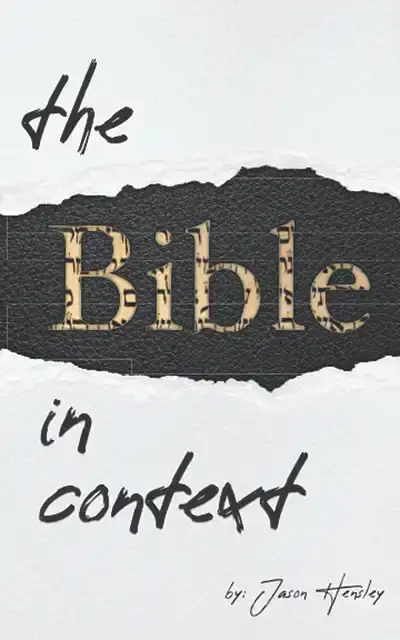 The Bible in Context
So that’s the beginning. Noticings and wonderings give us a foundation for appreciating the text of Scripture. But then, how do we go further? How do we actually find answers to our questions?
A few years ago, I put together a book called The Bible in Context because I felt that it would really help our community to have a framework for understanding passages and answering questions. That book dives deep into the framework, but for now, here’s a quick summary. When we approach the Bible and try to find answers to our questions, we can go through a threefold process:
- Facts
- Principles
- Applications
Without the facts, we can’t really understand the passage. That’s why it’s important to know that Psalm 72 is a psalm of David about Solomon. Without that, we can’t really understand what’s going on. So, to find the facts, we look at the historical, cultural, literary, and biblical contexts. All of the contexts add to our understanding of the passage. There may be idioms in the passage that people at that time understood very differently from how we do today, or cultural practices that mean something different to us now than they did then. To really grasp the passage, we need to understand those things (for instance, what is meant by “rain” on “mown grass” in Psalm 72:6?) Looking at the whole passage and its literary context can help us better understand terms (thus, Psalm 72:20 actually tells us that David wrote the psalm; by reading the whole psalm, we’ve already answered the question about the king). Biblical context, or seeing where these same ideas appear throughout the Bible, helps us establish that this psalm is not just about Solomon, but is also Messianic. Just consider how the psalm ends: “Blessed be the LORD, the God of Israel, who alone does wondrous things. Blessed be his glorious name forever; may the whole earth be filled with his glory! Amen and Amen!” (Psalm 72:18-19). The earth filled with God’s glory? I think we’ve heard that idea before.
Working through these contexts adds layers to the psalm and to our understanding of what’s going on. Once we have those facts, we can then consider the principles: the timeless truths that come from the passage. Thus, since the whole passage is a prayer for David about Solomon, a moving principle from the psalm is that parents should pray for their children. This habit applies in all circumstances, no matter where someone lives or what time period they live in. The ending, in which David declared that the earth would be filled with God’s glory, also brings out a principle: we should pray for that day. “Your kingdom come, your will be done on earth as it is in heaven.” (Matthew 6:10).
Finally, once we have the principles (and each person will likely find different principles in a chapter—not because principles change, but because often there are so many principles in a passage that one person cannot find all of them), then we can move on to applications. These are personal. An application is where I take the principles I found and apply them to my own life. My application won’t look the same as yours. So, when I decide to pray for my children, I might do so as soon as I wake up each morning. You might decide to do that at a different time. You might also have grown children (unlike me). Or you may have more or less than I. There are so many variables here that the applications aren’t ever going to be exactly the same.
There is one final step—a fourth step—that we shouldn’t forget. I don’t often add it to the list because it’s more complicated than the others. Once we have our facts, principles, and applications, we cannot keep them to ourselves. That’s the power of community. We should talk about them. We should be able to say, “Hey, I was studying Psalm 72, and I think it’s about David and Solomon. It reminded me of the importance of praying for our children, so I’m planning to start soon. What do you think? Do you think that’s what the passage is about?” And then the cycle starts over again. After we talk, we begin to notice other things that didn’t stand out before. We wonder different things. After we pray for our children, we start to have questions about that, questions that just didn’t occur to us before.
Conclusion
When we bring all of this together, we have a method and tools to open up Scripture. We won’t just read a passage again and say, “Oh, I understand that.” We’ll say, “That’s interesting, I wonder about that passage.” And then we’ll start to dive deeper. We won’t be able to help it. We’ll notice. We’ll wonder. And we’ll start building the context and meaning for our own lives.
Then, as you start to put together your facts, principles, and applications, get in touch. I’d love to hear them.
Jason Hensley,
Simi Hills Ecclesia, CA
- Unless otherwise noted, all quotations are from the English Standard Version.
Good points and comments. My grandfather, Aude Plew had been reading daily for over 70 years. He said that he always found something new that he hadn’t noticed before every cycle. He also said Christadelphians were a bunch of cracked pots, that is leaky vessels, so must refill ourselves with the word. I like the noticings and wonderings. It’s a great way to encourage Bro.s Sis’ and young people to break the surface and dig into it.
I love it when older brothers and sisters, like your grandfather, remind us that there’s always new things for us to learn––even when we’ve read the Bible over 70 times! The picture of a leaky vessel is so helpful; we always have to replenish. Thanks for sharing Bro. Samuel.