Redeeming the Digital Age
Tyrone Smartt considers faithful discipleship in a distracted digital world, calling readers to use technology wisely without surrendering attention.
 Read Time: 5 minutes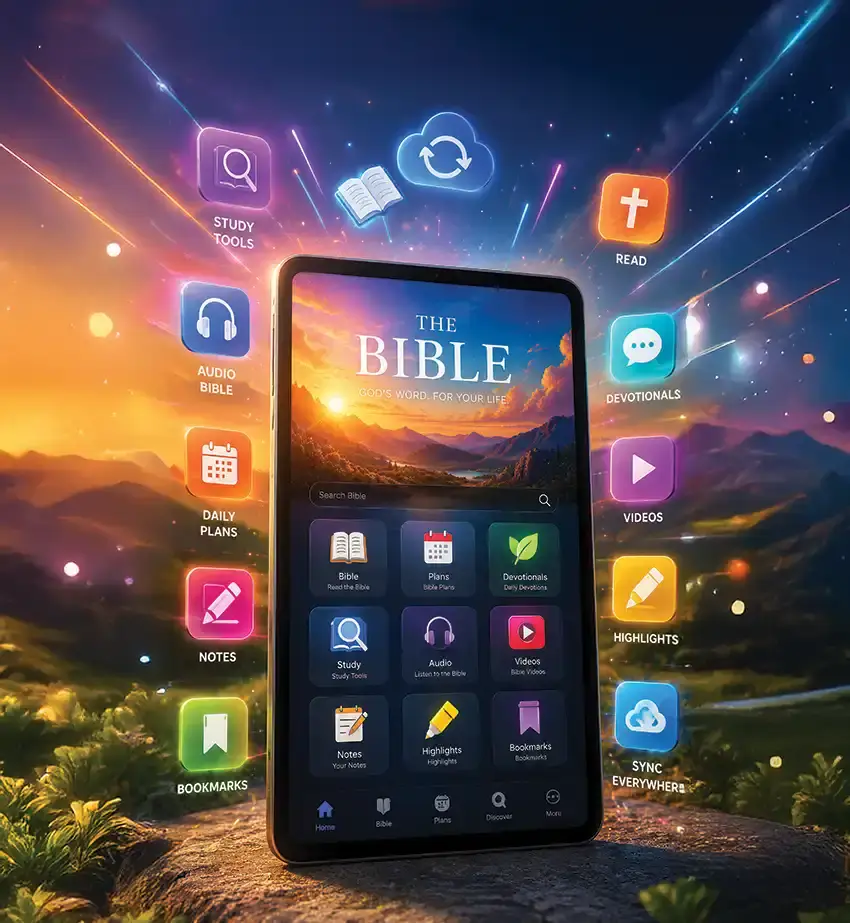
Throughout the history of Christianity, the need to engage with the Word of God was met through tablets of stone, scrolls, handwritten manuscripts, parchments, papyrus, and, eventually, the printing press. The famous Gutenberg Bible was printed by Johannes Gutenberg around 1455 in Mainz, Germany. The Latin Vulgate Bible was translated approximately a century earlier. Today, Bibles can be accessed in various media and carried in our pockets on cell phones, on our bookcases, on screens, and listened to in our earbuds. This new technology offers immense opportunities but also provides challenges and possibly distractions.
In this article, we will examine how believers can seek to remain faithful and true while exploring contemporary tools such as Bible apps, audio Bibles, reading plans, and other digital resources for spiritual research, growth, development, and dissemination.
Open to All
In this new era of accessibility, Scripture is so much more available than ever before—other generations would have perhaps only dreamed of access like this. Our smartphones, tablets, and laptops can access so many translations, commentaries, meditations, daily devotionals, and study tools. This access levels the playing field for those who wish to truly study God’s Word and build a relationship with His Son, Jesus the Christ.
Many of the advantages technology provides concern speed and convenience. Unlike having to locate multiple books, technology grants instant access to multiple translations for comparison and deeper understanding. It offers search functions that make it easy to locate themes, words, or passages, as well as integrated study resources such as commentaries, lexicons, maps, and cross-references. Not only are all of these information sources available, but they are portable, allowing Scripture and its study aids to accompany us throughout the day. Even more, technology offers customization, from font size to reading modes to personal notes. These attributes enhance accessibility for individuals new to Scripture and provide greater depth for those with extensive experience.
I remember when I moved from Guyana to the United States in 1993: my suitcase was overweight, and after having it checked, two significant items stood out—Young’s Analytical Bible Concordance and my King James Version cross-reference study Bible. I received both items as baptism gifts on April 8th, 1990. At customs, when an officer saw my one-way ticket and learned I was moving, he allowed me to keep my overweight luggage. Now, with a cell phone or iPad, my travels for gospel work are much lighter.
These tools can empower believers to research Scripture with depth, nuance, and context, enriching both personal devotion and group study, without having to carry the weight of a literal library with you.
Bible Apps: A Portable Spiritual Library
Bible apps like YouVersion, Logos, Olive Tree, Bible Companion, and Bible Gateway are now the main way millions access Scripture, offering much more than just digital text through their learning and devotional features. These apps transform the reading experience by offering daily reading reminders, the ability to highlight and take notes (or erase old notes!). They allow you to see multiple translations at once or follow community reading plans. These tools enable believers to engage with Scripture regularly, turning it into a daily habit rather than an occasional reference.
Audio Bibles: Hearing the Word Anew
Listening to Scripture is an old tradition of hearing the Word read aloud in community, renewed today through audio Bibles. Audio Bibles are especially helpful for:
- Commuters
- People with visual impairments
- Those who learn best through listening
- Anyone seeking to integrate Scripture into busy routines
Listening to Scripture reveals its narrative flow, emotion, and rhythm more clearly than silent reading.
Reading Plans: Structure for Spiritual Growth
Digital reading plans create structure and accountability, guiding believers from random to purposeful reading through organized approaches like chronological, thematic, or year-long formats. They offer clear daily goals, progress tracking, built-in reflections or questions, and flexibility to match spiritual seasons. Plans help readers stay rooted in Scripture even when life becomes hectic.

The Shadow Side: Distraction in a Hyperconnected World
However, one of the greatest tests is that many of these devices that contain the Bible and its resources also have all sorts of advertisements and distracting influences. These social media marketing messages and entertainment ads can distract us and lead us to places and spaces we did not plan to go, taking time away from meditating and reflecting on the sacred Word of God.
Have you ever begun a reading session but then drifted into other apps? Have you ever felt rushed rather than reflective? Or, has your experience with Scripture become like your experience with social media content—i.e., just something to consume and scroll through? Maybe you’ve lost the feeling of sacredness and reverence you had with a physical Bible.
The digital world seeks attention rather than reflection, making honest Scripture reading difficult without discipline. Without that discipline, Scripture reading can become shallow or inconsistent and is just one more thing to complete before the end of the day.
Cultivating Focus: Spiritual Discipline for the Digital Age
Technology is a tool, not a threat. The key is learning to use it intentionally. So, create a distraction-free environment by turning on Do Not Disturb. Use a dedicated device for Scripture (if possible). I especially recommend removing social media apps from the same screen as your Bible app. Small adjustments like these can dramatically improve focus.
Additionally, try to treat digital reading as sacred time. Even though it may seem like you’re just “spending time on your phone,” approach Scripture with the same reverence you would bring to a physical Bible. Therefore, begin with a prayer. Make sure you slow down—don’t skim. You could even take notes or meditate.
To distinguish between “phone time” and “Bible time,” many believers use digital tools for study and a physical Bible for devotion. You can also create special rhythms and rituals to help you set aside this time as special. You could read at the same time each day. You could designate a particular space your “reading space.” You could light a candle or take a deep breath. Again, prayer helps to set this aside as a special time.
Some Bible apps were built with the recognition that phones can be distracting. They offer offline versions to prevent internet distractions. Others may have focus modes that stop your notifications. Conversely, you can also select reading plans that match your spiritual season, creating a more engaging and reflective time for you. Always remember, technology should serve your spiritual life, not compete with it.
Redeeming the Digital Age
The digital arena is not necessarily the enemy of spiritual development. It’s a new area filled with opportunities for deep research and engagement, greater access to information, and opportunities for the development of richer meaning from various biblical texts. Digital resources, when used thoughtfully, can boost consistency, understanding, and community. When used poorly, they can distract and lessen the importance of Scripture. The aim is to use technology as a tool for God’s Word, not as a source of distraction.
Tyrone Smartt,
South Ozone Park Ecclesia, NY