Bolivia: As a Father…
The small ecclesia in La Paz, Bolivia, kept meeting in 2016 with the help of visiting brethren and the prayers of others.
 Read Time: 2 minutes

When we read the Apostle Paul’s epistles, the struggles of the first century ecclesias are open before us. The other aspect apparent is the Apostle’s own emotion, as a father for his children, he cared so much for his brethren. After many years of missionary presence, the La Paz Ecclesia’s members are striving to maintain regular meetings. Some of the original members baptized six to 10 years ago have moved to other countries (and are attending meetings there). Some have stopped attending due to various reasons. As of September 2016, a minimum of four members meet together to remember our Lord — two brothers and two sisters. The two brothers were baptized in November 2015, so the ecclesia is in need of our support.
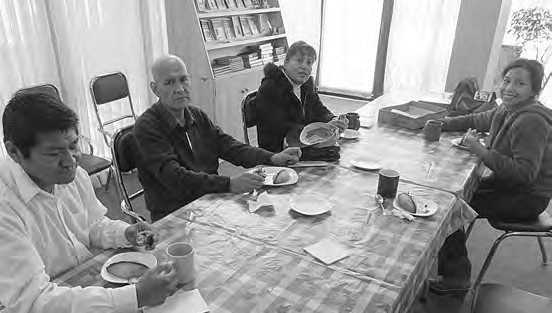
Brother Shimon and Sister Joanna Spina were the last missionary couple in La Paz. Since returning to Australia, Bro. Shimon has been in frequent contact with members and contacts via email, text and skype. Brother Don Luff visited La Paz in May for their annual Bible Camp and social time. Brother Robert Alderson from New Zealand spent about a week with the ecclesia in July providing good guidance regarding a number of matters. Brother Don Luff followed-up during September for five days of activities with ecclesial meetings every day, as well as personal discussions. On two occasions there was candid study and conversation about cooperation in love as members of God’s family. We were encouraged one evening by a study of ‘God’s 7,000 Year Plan’ — the changes during the Millennium to a world-wide dominion governed by justice and righteousness, leading to a time when God will be all in all. During another study, we reviewed ‘Our Basic Duties toward God’ — and we found that there are many — day-after-day commitment being one of them. Another sobering and helpful session, especially in today’s evil world, was about ‘The Treatment of Women’ — the Scriptures have so much wholesome guidance for the male regarding proper behaviour towards and with women. The Sunday exhortation was about ‘Our Speech’ — are we like our Lord, for they “wondered at the gracious words that proceeded out of his mouth” (Luke 4:22) and like Abigail — ‘in her tongue was the law of kindness’ in calming King David’s anger (Prov. 31:26).
Each country has its culture and customs that impact on our growth in the Truth. Bolivia is no different, with its indigenous traditions, church and family pressures, ‘el machismo’, money (or lack of), and the sheer challenge to ‘get along’ under these significant cultural and socioeconomic differences. Esteeming others better than oneself (Phil. 2:3), leads to oneness, and thus harmony. Every ecclesia is made of members with human nature and we should therefore help each other work together, being motivated by the love of our Father and of His son for us.
We appeal for your prayers that our brothers and sisters in Bolivia may continue to grow in the Lord.
Written by CBMA Bolivia linkman, Don Luff
Submitted by Jan Berneau, CBMA/CBMC Publicity